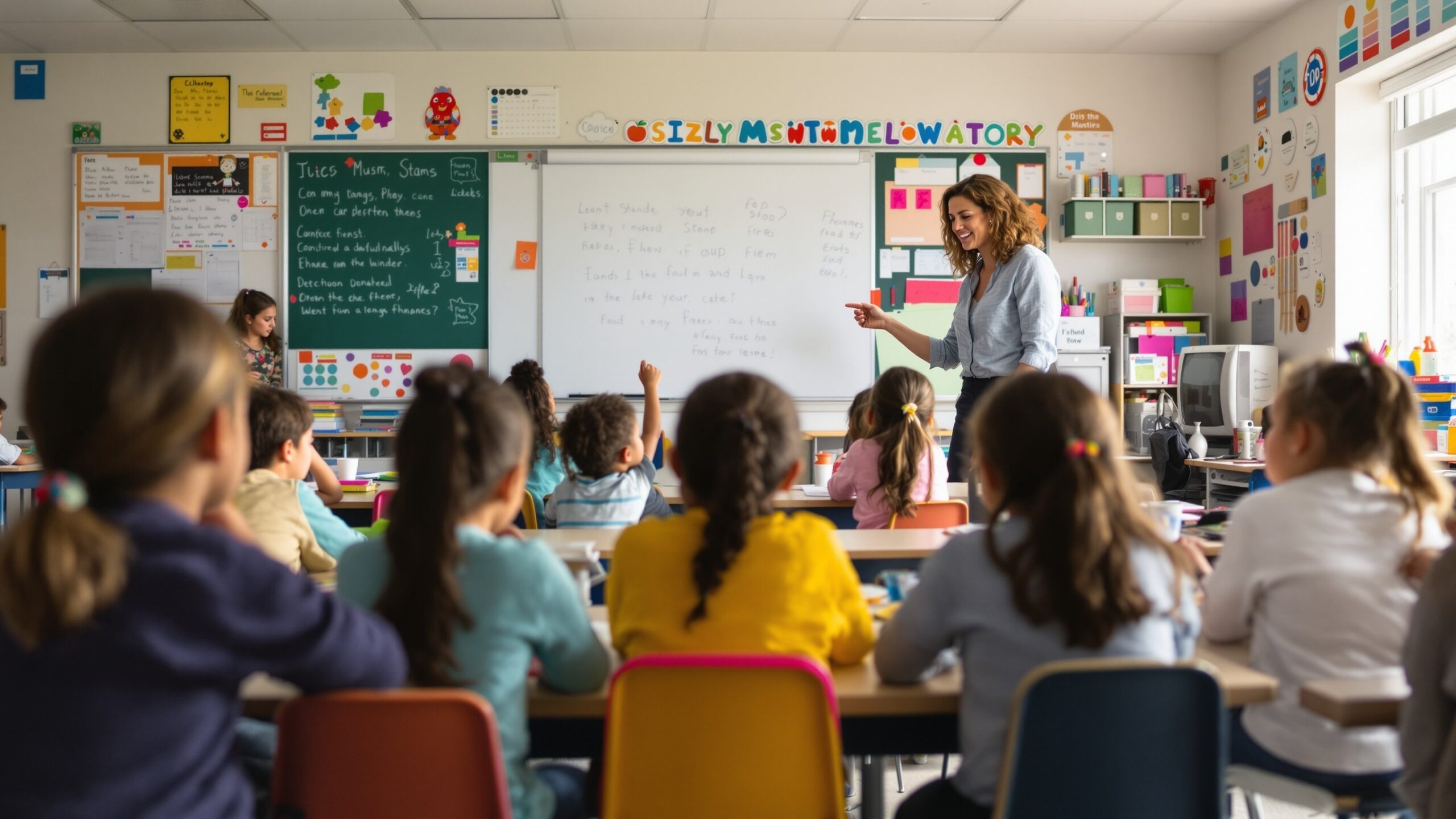
Effective classroom management is the foundation of successful teaching. Even the most well-designed lesson plan can fall flat in a chaotic learning environment. When teachers create structured, respectful, and engaging classrooms, students feel safe, motivated, and ready to learn. Classroom management is not about control—it is about leadership, clarity, consistency, and connection. In today’s diverse and fast-paced educational landscape, managing a classroom effectively requires more than enforcing rules. It involves building relationships, establishing expectations, promoting student engagement, addressing behavioral challenges constructively, and creating a positive learning culture. This practical guide explores proven strategies that help teachers create classrooms where both students and educators thrive.
A: Teach a response routine (signal/raise hand), practice it, and reinforce it immediately—then be consistent.
A: Set a clear policy, teach the procedure (where phones go), enforce calmly, and build engaging starts to reduce temptation.
A: Use a consistent cue (call-and-response, countdown, chime) and wait for full compliance before speaking.
A: Check difficulty, give a smaller first step, offer choice, and conference privately—then follow through on expectations.
A: Define voice levels, assign roles, use time limits, and circulate with quick check-ins and accountability.
A: Teach the transition like a skill: steps, timer, rehearsal, and a reset if needed.
A: Use predictable, proportional responses tied to behaviors, with chances to repair and rejoin learning.
A: Make entry routine quick and welcoming, start with a Do Now, track patterns, and follow school policy consistently.
A: Greet at the door, learn names fast, notice effort, and follow up on student interests and goals.
A: Reflect on 1 system to tighten tomorrow, reconnect with key students, and reset your tone at the door.
Understanding the True Meaning of Classroom Management
Classroom management is often misunderstood as simply maintaining discipline. In reality, it encompasses every action a teacher takes to create an environment conducive to learning. It includes routines, procedures, communication style, lesson design, emotional climate, and conflict resolution strategies.
An effectively managed classroom is one where students understand expectations, transitions happen smoothly, disruptions are minimal, and learning time is maximized. Students feel respected and accountable, and the teacher feels confident and in control without resorting to constant correction.
At its core, classroom management is proactive rather than reactive. Instead of waiting for problems to arise, effective teachers design systems that prevent many issues before they occur. This approach reduces stress and builds a positive classroom atmosphere from day one.
Establishing Clear Expectations from the Start
The first days of school set the tone for the entire academic year. Students need clarity about what behavior is expected, how work should be completed, and how interactions should unfold. Clearly defined rules and procedures provide structure. However, the key lies in how they are introduced. Rather than presenting a long list of rigid commands, effective teachers explain the purpose behind expectations. When students understand why certain behaviors matter—such as raising hands to ensure everyone is heard—they are more likely to cooperate. Consistency is equally important. If expectations change unpredictably or rules are enforced unevenly, students become confused or frustrated. Consistent follow-through builds trust. Students learn that boundaries are reliable, fair, and designed to support learning rather than control them.
Building Strong Teacher-Student Relationships
One of the most powerful classroom management strategies is relationship-building. Students are far more likely to respect and cooperate with teachers who show genuine interest in them.
Learning students’ names quickly, asking about their interests, acknowledging their efforts, and listening to their concerns all contribute to a sense of belonging. When students feel seen and valued, behavioral issues often decrease naturally.
Positive relationships also provide a foundation for constructive correction. When a teacher addresses misbehavior within the context of mutual respect, students are less defensive and more receptive. The classroom shifts from a battleground to a community.
Creating Engaging Lessons That Minimize Disruption
Engagement is one of the most overlooked elements of effective classroom management. Many behavioral issues arise not from defiance but from boredom or confusion. When students are actively engaged in meaningful tasks, there is less opportunity for disruption.
Well-structured lessons with clear objectives, varied activities, and opportunities for participation keep students focused. Incorporating discussions, collaborative work, problem-solving tasks, and hands-on learning makes the classroom dynamic.
Pacing also matters. Lessons that drag can lead to restlessness, while lessons that move too quickly can cause frustration. Effective teachers monitor student understanding continuously and adjust instruction accordingly.
When students are intellectually invested, classroom management becomes significantly easier.
Designing Effective Classroom Routines and Procedures
Routines reduce uncertainty and save valuable instructional time. Simple procedures for entering the classroom, submitting assignments, transitioning between activities, and seeking help create order.
For example, if students know exactly what to do when they finish an assignment early, downtime decreases. If there is a clear process for group work, confusion and noise are minimized.
Teaching routines requires modeling and practice. Teachers should demonstrate procedures, allow students to rehearse them, and provide feedback. Over time, these routines become automatic, allowing the classroom to operate smoothly.
Predictability fosters security. Students feel more confident when they know what to expect, and teachers experience fewer disruptions.
Maintaining Authority with Warmth and Professionalism
Effective classroom management balances authority with approachability. Being overly strict can create resentment, while being too lenient can lead to disorder. Professional authority stems from clarity, confidence, and fairness. Teachers communicate expectations calmly and assertively. They avoid power struggles and maintain composure even in challenging situations. Tone of voice, body language, and presence matter significantly. Standing confidently, making eye contact, and using measured speech convey leadership. At the same time, smiling, offering encouragement, and showing empathy maintain warmth. Students respond positively to teachers who demonstrate both strength and compassion.
Addressing Behavioral Issues Constructively
Even in well-managed classrooms, behavioral challenges will arise. The key is how they are handled.
Effective teachers address minor disruptions quickly and calmly, often through subtle interventions such as proximity, eye contact, or a gentle reminder. These strategies prevent escalation without embarrassing the student.
When more serious issues occur, private conversations are often more productive than public reprimands. Discussing behavior individually preserves student dignity and fosters reflection.
Rather than focusing solely on punishment, successful classroom management emphasizes accountability and growth. Asking students to reflect on their choices and repair harm encourages responsibility. Over time, students learn to self-regulate rather than simply comply.
Promoting a Positive Classroom Culture
A positive classroom culture encourages cooperation, respect, and shared responsibility. Culture is shaped by daily interactions, language, and attitudes. Teachers who emphasize encouragement over criticism create environments where students feel safe to participate. Recognizing effort and improvement, not just achievement, builds confidence.
Celebrating small successes strengthens community. Whether through verbal praise or class acknowledgments, positive reinforcement reinforces desired behaviors. When students feel part of a supportive community, they are more likely to uphold shared expectations.
Encouraging Student Ownership and Responsibility
Effective classroom management is not about micromanaging every detail. It involves gradually transferring responsibility to students. Providing leadership opportunities, such as classroom roles or peer mentoring, empowers students. When learners feel invested in maintaining a positive environment, they become active contributors rather than passive recipients. Encouraging self-assessment and reflection further promotes responsibility. When students evaluate their own work and behavior, they develop critical thinking and self-discipline. Ownership transforms classroom management from teacher-driven enforcement to collaborative stewardship.
Managing Transitions Smoothly
Transitions are often when disruptions occur. Moving from one activity to another can create confusion if not structured carefully.
Clear signals, countdowns, or consistent verbal cues help students shift focus efficiently. Preparing materials in advance and giving concise instructions reduces downtime.
Rehearsing transitions, especially at the beginning of the year, ensures students understand expectations. Smooth transitions preserve instructional time and maintain momentum.
When transitions are efficient, the classroom feels purposeful and organized.
Differentiating Instruction to Prevent Frustration
Students have diverse learning needs, abilities, and backgrounds. When instruction fails to address these differences, frustration can lead to behavioral challenges. Differentiation involves adapting content, process, or assessment to meet varying needs. Providing multiple ways to access information and demonstrate understanding keeps students engaged. Offering appropriate challenges prevents boredom among advanced learners while supporting those who need additional guidance. When students experience success, motivation increases and disruptions decrease. Effective classroom management is deeply connected to instructional design.
Communicating Effectively with Parents and Guardians
Strong communication with families reinforces classroom expectations and builds support networks.
Sharing classroom policies, academic goals, and behavioral expectations early in the year establishes transparency. When concerns arise, addressing them promptly and respectfully fosters collaboration.
Parents who understand classroom procedures can reinforce them at home. Positive communication—such as sharing student achievements—strengthens partnerships.
When teachers, students, and families work together, classroom management becomes more cohesive and effective.
Leveraging Technology Wisely in the Classroom
Technology can enhance learning but also create distractions if not managed properly. Clear guidelines for device usage are essential. Students should understand when technology is permitted and for what purposes. Monitoring tools and structured digital activities help maintain focus. Integrating interactive educational platforms, collaborative tools, and multimedia resources can increase engagement. However, technology should support instructional goals rather than replace meaningful interaction. Balanced and purposeful technology integration contributes to effective classroom management in modern education.
Managing Stress and Maintaining Teacher Well-Being
Classroom management is emotionally demanding. Teachers who neglect their own well-being may struggle to maintain patience and consistency.
Self-care, professional development, and peer support are critical. Reflecting on challenges and celebrating progress helps sustain motivation.
Maintaining perspective is equally important. Not every disruption reflects failure. Growth in classroom management occurs gradually through experience and adaptation.
When teachers feel balanced and supported, they are better equipped to lead confidently.
Adapting Classroom Management for Different Age Groups
Effective classroom management strategies vary depending on student age and developmental stage. Younger students often require more structured routines and explicit modeling of behavior. Clear visual cues and repetition help establish habits. Adolescents, on the other hand, respond well to autonomy and mutual respect. Involving them in rule-setting and offering choices increases cooperation. Understanding developmental psychology allows teachers to tailor strategies effectively.
Handling Conflict and Difficult Situations with Professionalism
Conflicts between students—or between students and teachers—require calm and objective handling.
Listening to all perspectives before making decisions demonstrates fairness. Encouraging dialogue rather than blame promotes resolution.
Maintaining professionalism, even when emotions run high, sets an example for students. Avoiding sarcasm, humiliation, or anger preserves respect.
Effective conflict resolution strengthens classroom culture and reinforces trust.
Reflecting and Continuously Improving
Classroom management is not static. It evolves with experience, reflection, and feedback.
Successful teachers regularly assess what is working and what needs adjustment. Gathering student input can provide valuable insights. Professional learning communities and workshops offer fresh perspectives and strategies. Continuous growth ensures that classroom management remains responsive to changing needs.
Reflection transforms challenges into opportunities for improvement.
The Long-Term Impact of Effective Classroom Management
Strong classroom management does more than create orderly environments. It shapes students’ academic success, emotional development, and social skills. Students who learn in structured, supportive classrooms develop self-discipline, resilience, and respect for others. They carry these skills beyond school into higher education and the workplace.
For teachers, effective classroom management reduces stress, increases job satisfaction, and enhances instructional impact.
Ultimately, managing a classroom effectively is about cultivating a learning environment where every student can succeed. It requires intention, empathy, structure, and adaptability. With consistent effort and thoughtful strategies, teachers can transform their classrooms into vibrant communities of growth and achievement.
Classroom management is not merely a skill—it is an art and a science. When mastered, it empowers educators to teach with confidence and inspires students to learn with enthusiasm.