
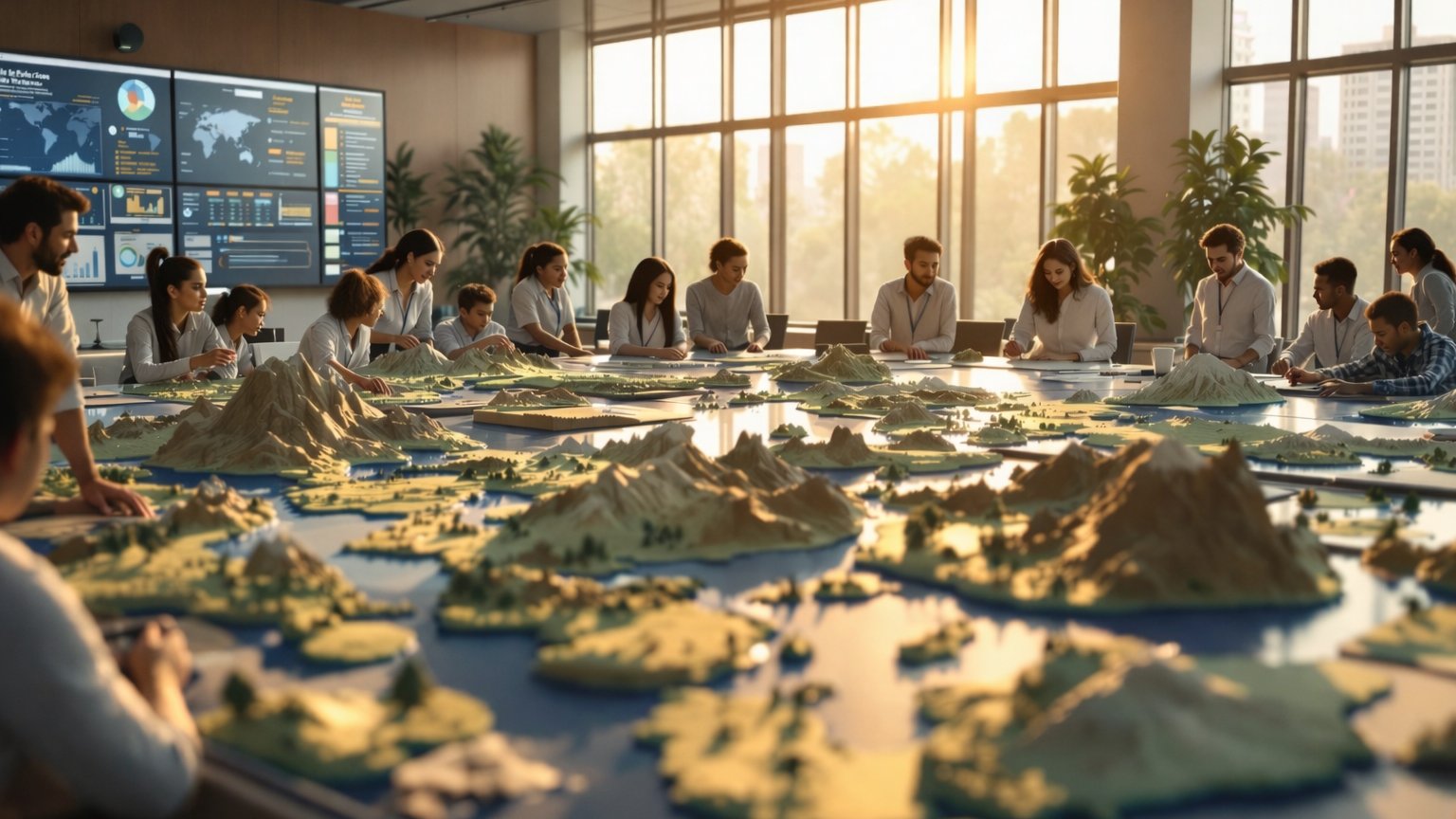
3D Learning Models & Maps bring education off the page and into the real world—transforming abstract ideas into experiences you can see, touch, and explore. From raised-relief geography maps and anatomical replicas to architectural scale models and interactive terrain landscapes, these tools turn learning into a hands-on journey that sparks curiosity and deepens understanding. Instead of memorizing flat diagrams, learners can trace mountain ranges with their fingers, examine ecosystems in layered detail, or explore historical sites as three-dimensional spaces. This collection dives into how 3D models and maps are reshaping classrooms, homeschooling environments, museums, and training programs. You’ll discover how tactile learning supports spatial reasoning, memory retention, and engagement across all ages—especially for visual and kinesthetic learners. Whether used to explain complex science concepts, bring history to life, or make geography unforgettable, 3D learning tools bridge the gap between theory and reality. Explore articles that highlight innovative designs, classroom applications, emerging technologies, and practical ways educators are using 3D learning models and maps to make knowledge tangible, immersive, and truly memorable.
A: Use one model with a 5-minute “notice/wonder,” then a simple locate-and-explain activity.
A: No—foam, clay, cardboard, and digital 3D viewers can deliver the same learning goals.
A: Tie every touch/rotation to a question, an observation, and a quick evidence-based response.
A: Add a scale reference, compare to a familiar object, and require one short calculation or estimate.
A: Use short repeated practice, start with simple shapes, and add labels in layers.
A: Ask for a two-angle sketch plus one paragraph explaining a feature’s function or impact.
A: Yes—pair visuals with sentence stems and hands-on vocabulary practice during exploration.
A: Assign roles (navigator, measurer, recorder, explainer) and rotate roles every 3–5 minutes.
A: Use a flashlight to create shadows on a relief map, then connect shadow changes to slope/elevation.
A: Practice translating 3D observations into 2D diagrams, captions, and map-reading questions.