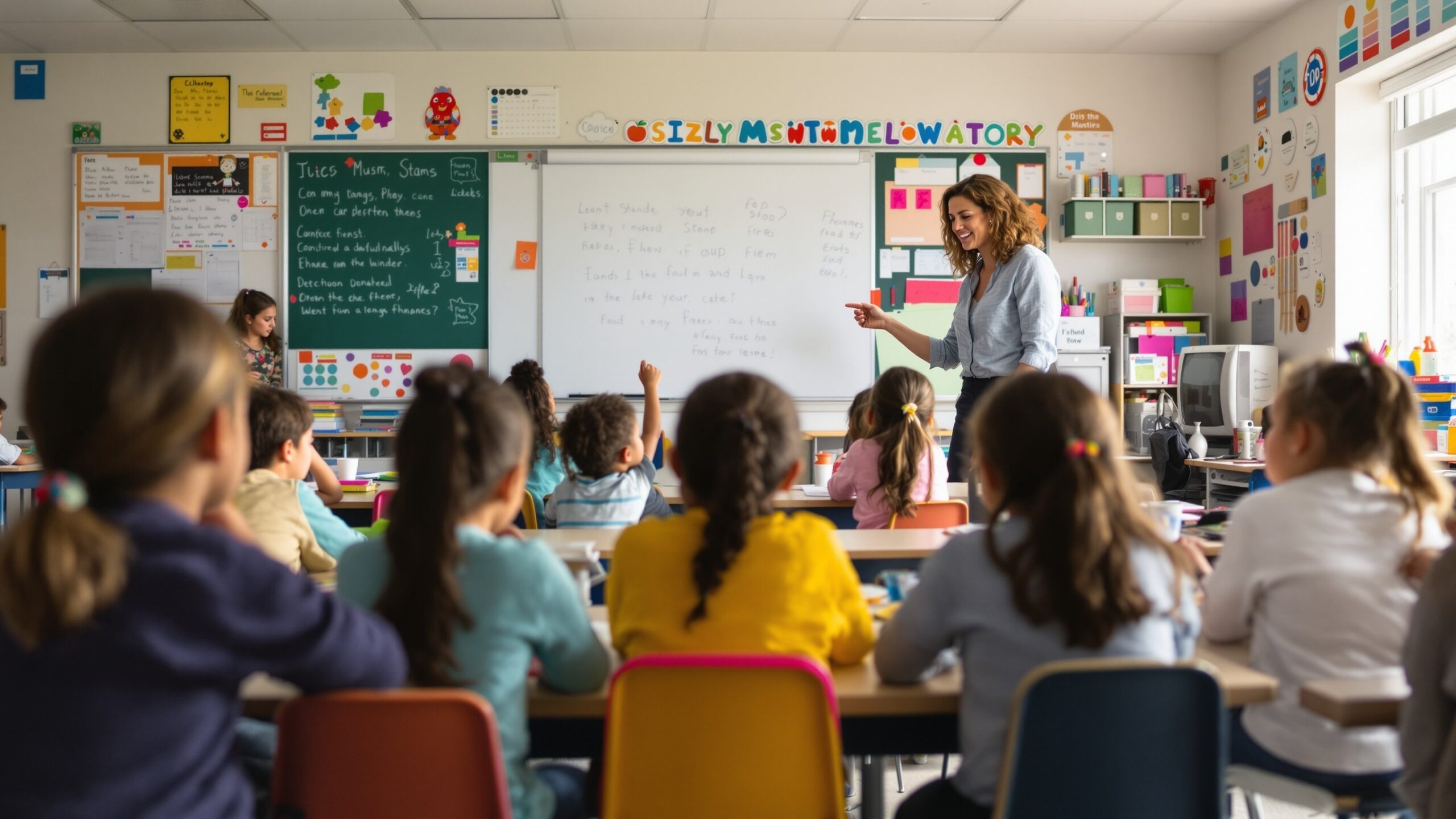
Classrooms are vibrant, dynamic spaces. They are filled with curiosity, emotion, personality, and energy. Sometimes, that energy spills over into disruption—side conversations, defiance, constant interruptions, off-task behavior, or even open challenges to authority. In those heated moments, yelling can feel like the fastest way to regain control. But while raising your voice might produce temporary silence, it often damages trust, weakens authority, and escalates tension. Handling disruptive students without yelling is not only possible—it is powerful. It strengthens classroom management, preserves relationships, and builds a culture of mutual respect. This guide explores proven, practical, and professional strategies that empower teachers to maintain authority calmly and confidently while fostering a positive learning environment.
A: Use a behavior cue: “Voices off. Eyes here. Thank you.”
A: Don’t debate—repeat the direction and offer a choice with a consequence.
A: Keep it private, keep it brief, and give two acceptable options.
A: Track patterns (time/task/peers) and adjust routines plus targeted supports.
A: Usually no—teach expectations to the whole class, correct individuals privately.
A: Offer a starter step, reduce the task, or provide a brief reset—then follow through.
A: Pause, proximity scan, then restart with a clear “when you hear my voice…” cue.
A: Immediate, proportional, and connected to the behavior (redo, restitution, loss of privilege).
A: Breathe out longer than you breathe in, relax shoulders, speak slower than usual.
A: If safety is at risk, behavior escalates repeatedly, or interventions aren’t working—document and refer.
Why Yelling Fails in Classroom Management
Yelling may seem effective in the short term, but it carries long-term costs. When teachers raise their voices, students often respond with fear, embarrassment, or resentment. Instead of internalizing expectations, they comply only to avoid punishment. Over time, this weakens intrinsic motivation and erodes the teacher-student relationship.
Yelling can also create a cycle. The louder a teacher becomes, the more students tune out. Some may even escalate their behavior for attention or out of defiance. Eventually, the classroom climate shifts from cooperation to confrontation. Learning suffers, and emotional safety declines.
Effective classroom management is not about overpowering students. It is about leading them. Authority built on calm confidence is far stronger than authority built on volume.
Understanding the Root Causes of Disruptive Behavior
Before addressing behavior, it is essential to understand it. Disruptive students are rarely acting out without reason. Behavior is communication. A student who constantly interrupts may be seeking attention or struggling with impulse control. A student who refuses to work may feel overwhelmed or insecure about their ability. Common root causes of disruptive behavior include academic frustration, lack of engagement, unmet emotional needs, peer influence, inconsistent boundaries, and external stressors. When teachers shift from “How do I stop this?” to “Why is this happening?” their responses become more strategic and compassionate. This mindset does not excuse inappropriate behavior. Instead, it provides insight. When educators understand the underlying need, they can address both the behavior and its cause, reducing recurrence.
The Power of Emotional Regulation
The first step in handling disruptive students without yelling is managing your own emotions. Classrooms can be stressful. When multiple students are off-task and deadlines are looming, frustration builds quickly. But students take cues from the adult in the room.
A calm teacher communicates control. A reactive teacher communicates instability.
Emotional regulation begins with awareness. Notice your physical cues—tight shoulders, raised heart rate, rapid speech. Pause before responding. Take a slow breath. Lower your voice rather than raising it. Silence, delivered intentionally, often commands more attention than shouting.
When teachers model emotional control, students learn to regulate themselves as well. Calm authority creates a steady classroom atmosphere where disruptions lose momentum.
Establish Clear Expectations From the Beginning
Prevention is more powerful than correction. One of the most effective strategies in classroom management is establishing clear, consistent expectations from day one. Students thrive when boundaries are predictable. Vague rules such as “Be respectful” may sound positive, but they require interpretation. Specific expectations—such as “Raise your hand before speaking” or “Stay seated during instruction”—remove ambiguity. Explain why expectations exist. When students understand that procedures protect learning time and ensure fairness, they are more likely to comply. Practice routines repeatedly. Reinforce them consistently. Most importantly, enforce expectations calmly and consistently. When rules fluctuate depending on mood or circumstance, students test limits. Consistency builds credibility. Students quickly learn that compliance is not negotiable, yet correction is respectful.
Use Proximity and Presence
Not all interventions require words. In fact, some of the most effective strategies are silent. Physical proximity is a powerful classroom management tool. Simply standing near a disruptive student often redirects behavior. The teacher’s presence serves as a reminder without creating a public confrontation.
Eye contact can communicate expectation. A subtle gesture can signal redirection. Pausing mid-sentence and looking toward the disruption can restore focus without embarrassment. These strategies maintain dignity. They prevent escalation because they do not challenge the student publicly. When teachers rely on quiet authority, they demonstrate control without drama.
Build Strong Relationships First
Students are far less likely to disrupt teachers they respect and feel connected to. Relationship-building is not a “soft skill”; it is a strategic component of effective classroom management. Take time to learn about your students’ interests. Greet them at the door. Use their names frequently. Acknowledge effort. Listen when they speak.
When conflict arises, students who feel valued are more receptive to correction. They understand that the teacher’s goal is guidance, not punishment.
If a particular student struggles frequently, invest additional time privately. Ask questions. Express concern rather than accusation. Statements like “I’ve noticed you’ve been having trouble staying focused. How can I help?” open dialogue. Students often reveal barriers that explain their behavior.
Relationships create influence. Influence reduces disruption.
Redirect Instead of React
When a student disrupts instruction, the instinct may be to confront immediately and forcefully. However, reactive responses can amplify tension. Redirection is more effective.
Redirection involves calmly reminding students of expectations and guiding them back on task. For example, instead of saying, “Stop talking right now,” try, “We’re working silently. Please return to your assignment.”
Tone matters. Deliver redirections quietly and briefly. Avoid lectures in the middle of instruction. The goal is correction, not humiliation.
If disruption continues, address it privately after class. Public power struggles rarely end well. Private conversations allow both teacher and student to maintain dignity while resolving the issue constructively.
Offer Choices to Increase Cooperation
Students crave autonomy. When they feel controlled, resistance increases. Offering limited, structured choices reduces defiance without compromising authority. For instance, if a student refuses to begin work, you might say, “You can start with the first question independently, or we can work on it together for five minutes. Which do you prefer?” Both options lead toward compliance, but the student retains agency. Choices shift the dynamic from command to collaboration. They communicate respect while maintaining boundaries. This strategy is especially effective with students who exhibit oppositional behavior.
Reinforce Positive Behavior Consistently
Attention is a powerful currency in the classroom. When teachers focus primarily on negative behavior, students may disrupt simply to gain recognition. Positive reinforcement shifts attention toward desired behaviors. Acknowledge students who follow expectations. Comment on effort, improvement, and cooperation.
Statements like “I appreciate how quietly this group started working” subtly redirect others. Recognition motivates compliance far more effectively than criticism.
Consistency is key. If positive behavior goes unnoticed while misbehavior receives immediate attention, students learn that disruption yields results. Balanced feedback encourages a culture of accountability and achievement.
Address Chronic Disruption Strategically
Some students require more targeted interventions. Chronic disruption may stem from deeper academic or behavioral challenges.
Begin with documentation. Note patterns—time of day, subject, peer interactions. Patterns reveal triggers.
Collaborate with support staff when needed. School counselors, special education teams, and administrators can provide insight and strategies.
Involve families constructively. Approach conversations as partnerships, not complaints. Share observations, listen to concerns, and develop a unified plan.
Intervention plans, behavior contracts, and structured check-ins can provide additional support. These strategies emphasize growth and accountability rather than punishment alone.
Maintain Instructional Engagement
Boredom breeds disruption. Engaging instruction is one of the most underutilized classroom management strategies. Vary teaching methods. Incorporate discussion, movement, collaboration, and technology when appropriate. Chunk instruction into manageable segments. Check for understanding frequently.
When students are actively participating, opportunities for misbehavior decrease. Engagement channels energy productively. This does not mean lessons must be elaborate performances. Clear objectives, relevant material, and interactive elements are often enough to maintain attention.
De-Escalation Techniques in Heated Moments
Despite preparation, escalation can occur. A student may argue, shout, or refuse directions. In these moments, maintaining composure is critical.
Lower your voice. Slow your speech. Avoid ultimatums delivered in anger. Offer space if needed. Sometimes a brief cooling-off period prevents a larger confrontation.
Avoid matching the student’s emotional intensity. When teachers escalate alongside students, conflicts intensify. Calm responses signal that disruption will not produce drama.
After the situation stabilizes, revisit expectations privately. Discuss consequences respectfully and consistently. Reflection is more effective than reaction.
The Role of Consistent Consequences
Handling disruptive students without yelling does not mean avoiding consequences. Boundaries must have follow-through.
Consequences should be logical, consistent, and proportionate. If a student disrupts group work, a temporary change in seating may be appropriate. If assignments are incomplete due to off-task behavior, structured time to finish them is reasonable.
Deliver consequences calmly. Avoid sarcasm or emotional commentary. When consequences are predictable rather than personal, students perceive them as fair.
Consistency builds trust. Students quickly recognize when teachers mean what they say.
Modeling Respect to Earn Respect
Respect in the classroom is reciprocal. When teachers speak respectfully—even during correction—they demonstrate the standard they expect. Avoid public shaming. Avoid labeling students. Address behavior, not character. Saying “This behavior is disruptive” is more effective than “You are disruptive.” Students observe how teachers handle frustration. Modeling respectful communication teaches conflict resolution more powerfully than lectures ever could.
Encouraging Reflection and Accountability
Helping students reflect on their behavior promotes long-term growth. After addressing a disruption, guide the student through reflection.
Ask questions that encourage ownership. What happened? What were you feeling? How did your behavior affect others? What can you do differently next time?
Reflection shifts focus from punishment to responsibility. Over time, students internalize expectations rather than complying out of fear.
This approach strengthens social-emotional learning while improving classroom behavior.
Building a Calm Classroom Culture
Classroom culture determines how often disruptions occur. When norms emphasize cooperation, empathy, and responsibility, students regulate one another positively.
Establish rituals that promote unity. Encourage peer support. Celebrate progress collectively.
A calm classroom does not happen by accident. It is cultivated intentionally through consistency, modeling, and clear communication.
Teachers who prioritize culture often find that disruptions diminish naturally because expectations are internalized.
Professional Growth in Classroom Management
Handling disruptive students without yelling is a skill that develops with practice. Even experienced educators refine their approach continually. Reflect regularly. Which strategies are working? Where do conflicts escalate? Seek feedback from colleagues. Observe other classrooms. Professional development in classroom management can provide new tools and perspectives. Most importantly, practice self-compassion. Teaching is demanding. Moments of frustration do not define effectiveness. Growth occurs through reflection and intentional adjustment.
Authority Without Volume
Yelling may silence a classroom temporarily, but calm authority transforms it permanently. When teachers manage disruptive students with composure, clarity, and consistency, they create environments where respect thrives and learning flourishes. Effective classroom management is not about domination. It is about leadership. It requires emotional regulation, relationship-building, clear expectations, and strategic intervention. It demands patience and persistence.
Students remember how teachers made them feel. A classroom led without yelling communicates safety, dignity, and strength. In such an environment, students are not only quieter—they are more engaged, more respectful, and more willing to grow. Handling disruptive students without yelling is not merely a strategy. It is a commitment to professionalism, emotional intelligence, and lasting educational impact.