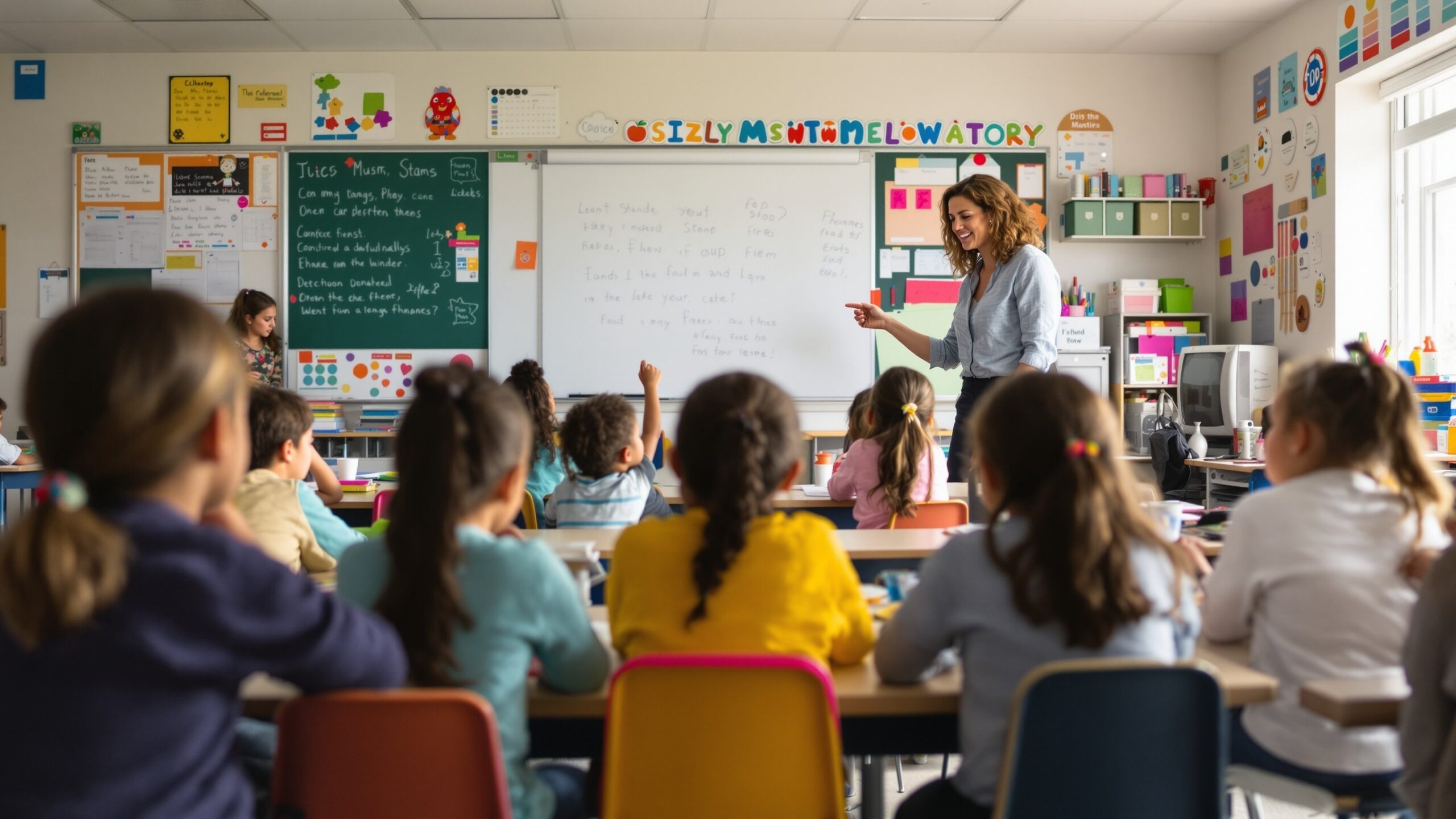
Classroom management is the foundation of effective teaching. Without structure, even the most engaging lesson plans can collapse under the weight of disruptions, disengagement, and unclear expectations. But with the right classroom management strategies in place, teachers can transform chaos into collaboration and distraction into focus. Whether you’re a new teacher navigating your first year or a veteran educator refining your approach, these 25 proven classroom management strategies actually work. They are practical, research-backed, and adaptable to elementary, middle, and high school classrooms alike.
A: Tighten routines + transitions with timers and practice for a week.
A: Teach noise levels, use proximity, narrate compliance, and reset expectations before work time.
A: Don’t debate—state, redirect, and discuss privately after class.
A: Use think time, structured turn-and-talk, and low-stakes response tools (boards, polls).
A: Reminder → redirect → choice → brief reset → follow-up conversation (and document patterns).
A: Assign roles, set a noise level, give a checklist, and add mid-point check-ins.
A: Offer a simple choice, keep calm, give space, and circle back with a private repair chat.
A: Greet at the door, learn interests, and schedule short positive check-ins.
A: Teach a clear policy, use consistent routines (phone caddy/away), and reinforce predictably.
A: Be consistent with the process, but flexible with supports—fair means equitable.
1. Start Strong from Day One
The first days of school set the tone for the entire year. Students quickly form impressions about what is acceptable and what is not. Establishing routines, procedures, and expectations immediately creates structure and security. When teachers communicate confidence, clarity, and consistency from the beginning, students respond with respect. A strong start prevents the need for reactive discipline later.
2. Establish Clear Expectations
Ambiguity invites misbehavior. Clearly defined expectations eliminate confusion and provide a roadmap for student behavior. Instead of saying “be respectful,” explain exactly what respect looks like in action—raising hands before speaking, listening when others talk, and keeping hands to oneself. When expectations are explicit, students are more likely to meet them.
3. Teach Procedures Like Academic Content
Procedures should be taught, modeled, practiced, and reinforced just like reading or math. Whether it’s entering the classroom, transitioning between activities, or turning in assignments, students need guided practice. Rehearsing procedures may feel repetitive at first, but it dramatically reduces disruptions throughout the year.
4. Build Positive Relationships
Students are far more likely to follow rules when they feel valued. Greeting students at the door, learning their interests, and showing genuine care builds trust. Strong teacher-student relationships reduce behavioral problems and increase engagement. When students know you care, they care about your expectations.
5. Use Consistent Consequences
Consistency is one of the most important classroom management techniques. If consequences change depending on mood or situation, students test boundaries. Clear, predictable consequences reinforce fairness. Students should understand exactly what happens when rules are broken—and see that those consequences are applied consistently.
6. Reinforce Positive Behavior
What gets recognized gets repeated. Praising students for meeting expectations shifts attention from misbehavior to positive conduct. Specific praise such as “I appreciate how quietly you transitioned” is more effective than general compliments. Over time, reinforcing positive behavior builds a culture of accountability.
7. Maintain Structured Routines
Routine creates stability. When students know what to expect, anxiety decreases and focus increases. A predictable daily structure—including bell work, transitions, and closing activities—minimizes downtime, which is often when disruptions occur.
8. Design Engaging Lessons
Boredom is a powerful trigger for misbehavior. Engaging lessons that incorporate discussion, movement, collaboration, and real-world connections naturally reduce off-task behavior. Students who are intellectually invested are less likely to cause disruptions. Active learning is one of the most overlooked classroom management strategies.
9. Use Nonverbal Signals
Not every correction needs to interrupt instruction. Proximity, eye contact, hand gestures, or a pause can redirect behavior quietly and effectively. Nonverbal communication preserves instructional time and avoids embarrassing students publicly.
10. Practice Proximity Control
Simply moving closer to a student who is off-task can redirect behavior without confrontation. Proximity signals awareness and prevents escalation. Many disruptions dissolve when students realize the teacher is present and attentive.
11. Set High Expectations
Students often rise to the level of expectations placed upon them. Communicating belief in students’ abilities encourages responsibility and maturity. High expectations paired with support foster independence and accountability.
12. Implement a Clear Attention Signal
An attention signal saves valuable time. Whether it’s a countdown, a call-and-response phrase, or raised hand signal, students must know how to respond instantly. Teaching and practicing this signal ensures smooth transitions and minimizes noise.
13. Address Misbehavior Privately
Public corrections can damage student dignity and lead to power struggles. When possible, speak privately with students about behavior concerns. Private conversations preserve relationships while reinforcing expectations.
14. Offer Choices
Providing structured choices empowers students and reduces resistance. For example, allowing students to choose between two assignments or select their seating partner within guidelines increases cooperation. Choice fosters autonomy without sacrificing control.
15. Incorporate Movement
Long periods of sitting can lead to restlessness. Brain breaks, stretch intervals, or movement-based activities re-energize students. Movement supports focus and reduces behavioral challenges, especially in younger students.
16. Use Restorative Conversations
When conflict arises, restorative conversations help students reflect on their actions and repair harm. Instead of focusing solely on punishment, restorative approaches build empathy and accountability. Students learn from mistakes rather than feeling labeled by them.
17. Establish Classroom Norms Together
Inviting students to contribute to classroom norms increases buy-in. When students help create expectations, they feel ownership. Collaborative rule-setting builds community and shared responsibility.
18. Keep Directions Clear and Concise
Overly complex instructions create confusion. Short, direct directions improve compliance and reduce off-task behavior. Asking students to repeat directions back ensures understanding before work begins.
19. Use Strategic Seating Arrangements
Seating can dramatically influence behavior. Separating talkative students or arranging desks for collaboration when appropriate supports classroom goals. Flexible seating arrangements can adapt to different learning activities while maintaining order.
20. Monitor and Circulate Constantly
Active monitoring keeps students accountable. Circulating the room while students work increases engagement and deters off-task behavior. When teachers are visible and involved, disruptions decrease.
21. Develop Strong Teacher Presence
Confidence, calmness, and clarity define strong teacher presence. Students respond to tone, posture, and consistency. Remaining composed during disruptions prevents escalation and models emotional regulation.
22. Use Logical Consequences
Logical consequences directly relate to the misbehavior. If a student misuses materials, they temporarily lose access. If work is incomplete due to off-task behavior, time is provided to finish. Consequences that connect to actions feel fair and educational rather than arbitrary.
23. Communicate with Parents Proactively
Parent communication should not be limited to problems. Positive messages home build partnerships and reinforce good behavior. When parents and teachers collaborate, students experience consistent expectations across environments.
24. Reflect and Adjust Regularly
Effective classroom management requires reflection. What worked this month may need tweaking next month. Regularly evaluating strategies and adjusting based on student needs keeps management proactive rather than reactive.
25. Model the Behavior You Expect
Students mirror adult behavior. If teachers demonstrate respect, punctuality, preparedness, and calm communication, students are more likely to follow suit. Modeling professionalism and kindness sets a powerful example.
Why These Classroom Management Strategies Work
These proven classroom management strategies succeed because they combine structure with relationship-building. They emphasize clarity, consistency, engagement, and respect.
Effective classroom management is not about strict control—it is about creating an environment where learning thrives. It is proactive rather than punitive, relationship-driven rather than rule-driven.
Teachers who implement these techniques often notice:
- Increased student engagement
- Fewer behavioral disruptions
- Stronger classroom community
- Higher academic achievement
- Reduced teacher stress
The key is consistency. Even the best strategy fails without follow-through.
Final Thoughts on Effective Classroom Management
Mastering classroom management does not happen overnight. It is a skill refined through experience, reflection, and adaptation. However, when teachers intentionally apply these 25 proven strategies, they build classrooms that feel safe, structured, and inspiring.
At its core, classroom management is about leadership. It is about guiding students not only toward academic success but toward responsibility, empathy, and self-discipline.
When expectations are clear, relationships are strong, and instruction is engaging, classrooms transform. And in that transformation, both teachers and students thrive. By implementing these classroom management strategies that actually work, educators can confidently lead classrooms where learning flourishes every single day.