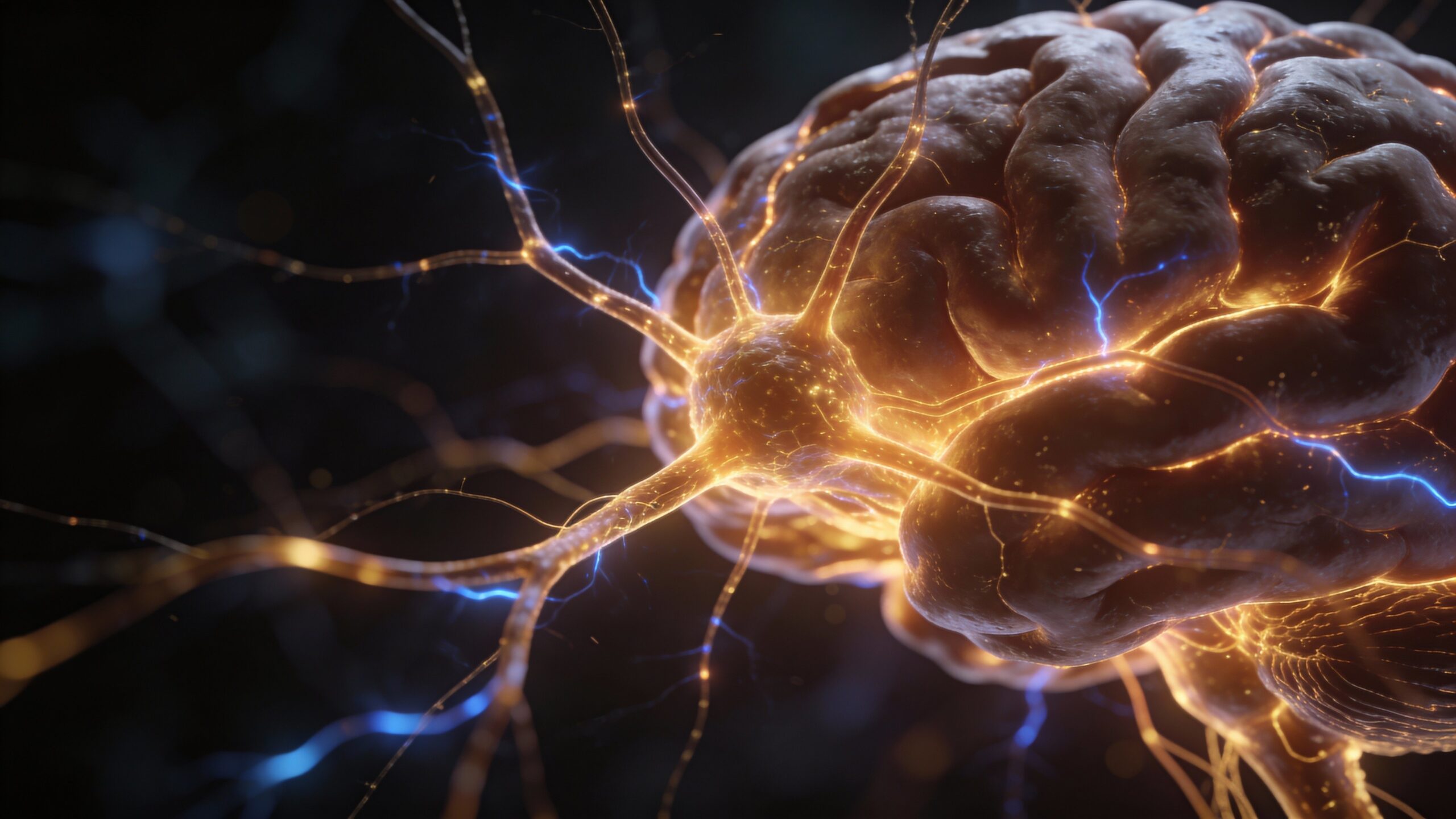
Memory is often imagined as a mental filing cabinet—information goes in, sits on a shelf, and can be pulled out whenever needed. In reality, memory is far more dynamic, fragile, and fascinating. It is a living system that changes every time you use it, reshaping itself with experience, emotion, and repetition. Understanding how memory actually works can dramatically change how you learn, study, and retain information—turning hours of effort into efficient, lasting knowledge. This guide explores the science of memory, how your brain encodes and stores information, why forgetting happens, and the proven strategies that help you learn faster and remember longer.
A: You may be relying on short-term working memory; add spacing + retrieval practice to transfer it into long-term memory.
A: Yes as a quick orientation pass—but convert it into questions and do closed-book recall to make it stick.
A: Start small (20–40) and prioritize accuracy; consistency matters more than volume, especially with spaced scheduling.
A: Skim structure, then do recall summaries section-by-section and finish with a short self-test.
A: Practice retrieval under timed conditions, use cue words, and do “blank-page outlines” to build confident access paths.
A: If it steals attention, skip it; if it’s low-distraction and consistent, it can be fine—test with a recall check.
A: Aim for 25–45 minutes with a short break; stop while you can still recall accurately, not when you’re exhausted.
A: Make it more “cue-rich”: add an example, a contrast, and a one-sentence explanation, then retrieve it on multiple days.
A: They’re best as retrieval hooks; pair them with meaning and examples so you can apply the knowledge, not just recite it.
A: A daily 10-minute active recall review (plus sleep) beats occasional long study marathons every time.
The Three Core Stages of Memory
Every memory you have ever formed goes through three essential stages: encoding, storage, and retrieval. These stages are not separate compartments but overlapping processes that interact continuously.
Encoding is the moment information first enters your brain. This happens when you read, hear, see, or experience something. Your brain translates sensory input into neural patterns, creating the initial trace of a memory. Attention plays a huge role here—if you are distracted, the encoding is weak, and the memory may never fully form.
Storage is what happens after encoding. The brain consolidates information, strengthening neural connections over time. During sleep, especially deep sleep, the brain reorganizes and stabilizes memories, transferring some from short-term holding areas into long-term networks distributed across the cortex.
Retrieval is the act of recalling information. This is not a simple playback but a reconstruction. Each time you remember something, you rebuild it from stored fragments. That reconstruction can subtly change the memory, reinforcing some parts and weakening others.
Understanding these stages reveals why some learning methods work better than others. Effective learning strengthens encoding, supports consolidation, and practices retrieval.
Short-Term Memory vs Long-Term Memory
Short-term memory, often called working memory, is your mental workspace. It holds information temporarily while you think, calculate, or process tasks. Its capacity is limited—most people can hold only a handful of items at once. This is why phone numbers, instructions, and complex concepts can feel overwhelming.
Long-term memory, by contrast, has enormous capacity. It stores facts, experiences, skills, and habits over days, years, or a lifetime. Long-term memory includes several systems, such as episodic memory for personal experiences, semantic memory for facts and concepts, and procedural memory for skills like riding a bike or playing an instrument.
Learning faster depends on moving information efficiently from working memory into long-term memory and building strong connections so retrieval becomes automatic.
Why We Forget (And Why Forgetting Is Normal)
Forgetting is not a flaw—it is a feature. The brain constantly filters information to avoid overload. If every detail of every moment were retained, decision-making and attention would be impossible.
Forgetting happens for several reasons. One is decay, where unused neural connections weaken over time. Another is interference, where new information competes with or overwrites old memories. Retrieval failure can also occur, where the memory exists but the cues needed to access it are missing.
Emotion, stress, and sleep all influence forgetting. High stress can impair encoding and retrieval, while sleep deprivation disrupts consolidation. This is why cramming late into the night often leads to poor retention.
How the Brain Physically Stores Memories
At a microscopic level, memories are stored through changes in synapses—the connections between neurons. When you learn something, neurons fire together, and their connections strengthen. This process, known as synaptic plasticity, is the foundation of learning and memory.
Repeated activation of neural pathways strengthens them, making future activation faster and easier. This is why practice leads to mastery and why skills become automatic with repetition. The phrase “neurons that fire together wire together” captures this principle.
Memory is not stored in a single location. Different aspects of a memory—visual details, emotions, sounds, meanings—are stored in different regions of the brain. The hippocampus acts as a coordinator, binding these elements into a coherent experience and helping transfer them to long-term storage.
The Role of Emotion in Memory
Emotion is one of the most powerful drivers of memory. Events that are emotionally charged—joyful, frightening, surprising, or meaningful—are often remembered vividly. This is because emotion activates the amygdala, which enhances encoding and consolidation.
You can use this principle to learn faster. Adding emotional relevance, curiosity, or personal meaning to information strengthens memory. Stories, vivid imagery, and real-world applications create emotional hooks that make learning stick.
Sleep: The Hidden Engine of Learning
Sleep is not passive rest; it is active memory processing. During sleep, especially during slow-wave and REM stages, the brain replays patterns of neural activity from the day, strengthening important connections and pruning irrelevant ones.
Studies consistently show that sleep improves retention, problem-solving, and creativity. Naps can also boost learning, especially after intense study sessions. Skipping sleep undermines everything you learned during the day.
Attention and Focus: The Gatekeepers of Memory
Memory begins with attention. If you are multitasking, checking notifications, or distracted, your brain cannot encode information deeply. Shallow encoding leads to fragile memories that fade quickly. Deep focus, even for short periods, dramatically improves learning. Techniques like time-blocking, minimizing distractions, and single-tasking create the conditions for strong encoding.
The Spacing Effect: Why Timing Matters
One of the most robust findings in cognitive science is the spacing effect. Learning spread out over time leads to far better retention than massed practice or cramming. When you revisit information after a delay, your brain must work harder to retrieve it, which strengthens memory. Spaced repetition systems use this principle to schedule reviews at optimal intervals, maximizing efficiency.
Retrieval Practice: The Secret to Long-Lasting Learning
Testing yourself is one of the most effective learning strategies. Retrieval practice forces the brain to reconstruct information, strengthening neural pathways and revealing gaps in understanding. This does not require formal exams. Quizzing yourself, explaining concepts aloud, teaching others, or writing summaries from memory all enhance retrieval. The act of recalling is more powerful than rereading or highlighting.
Elaboration and Deep Processing
Memory improves when information is processed deeply rather than superficially. Elaboration involves connecting new information to existing knowledge, asking questions, and exploring meaning. When you relate a concept to personal experiences, analogies, or broader themes, you create multiple retrieval pathways. This makes the memory more resilient and easier to access.
The Power of Visualization and Imagery
The brain is highly visual. Creating mental images, diagrams, or vivid scenes can dramatically improve memory. Memory champions often use visualization techniques like the memory palace, where information is placed in imagined locations to aid recall. Even simple imagery—picturing concepts, drawing sketches, or visualizing processes—enhances encoding and retrieval.
Chunking: Making Information Manageable
Chunking involves grouping information into meaningful units. Instead of remembering isolated details, the brain stores patterns and structures. For example, language learners chunk phrases, musicians chunk musical patterns, and experts chunk complex information into organized frameworks. Chunking reduces cognitive load and improves working memory efficiency.
How Prior Knowledge Shapes New Learning
Your brain does not learn in isolation. New information is interpreted through existing knowledge structures called schemas. When new information fits existing schemas, learning is faster and retention is stronger. However, misconceptions can interfere with learning. Actively updating and refining schemas through reflection and feedback improves accuracy and adaptability.
Metacognition: Thinking About Your Thinking
Metacognition is awareness of how you learn. Understanding your strengths, weaknesses, and effective strategies allows you to optimize learning. Monitoring comprehension, adjusting strategies, and reflecting on progress enhance long-term retention. Learners who use metacognitive strategies outperform those who rely on intuition alone.
Practical Strategies to Learn Faster
To apply the science of memory, focus on strategies that strengthen encoding, consolidation, and retrieval. Study in focused sessions with minimal distractions, use spaced repetition to revisit material over time, and actively test yourself. Connect new information to what you already know, create vivid mental images, and explain concepts in your own words.
Prioritize sleep, manage stress, and incorporate breaks to allow consolidation. Engage emotionally with material by finding relevance, curiosity, or purpose. Use chunking to organize information into frameworks rather than isolated facts.
The Myth of Learning Styles
Popular culture suggests that people are visual, auditory, or kinesthetic learners. Research shows that while preferences exist, learning styles do not significantly affect outcomes. What matters more is using multiple modalities—reading, listening, visualizing, and practicing—to strengthen memory networks.
Memory, Habits, and Skill Learning
Not all learning is factual. Skills and habits are stored in procedural memory, which develops through repetition and practice rather than conscious recall. This is why practicing a skill leads to automatic performance. Procedural learning benefits from consistent practice, feedback, and gradual difficulty increases. Unlike facts, skills are often retained even when explicit memory fades.
The Role of Stress and Mood
Chronic stress impairs memory by disrupting hippocampal function and sleep. Positive mood, moderate challenge, and a sense of control enhance learning. Techniques like mindfulness, exercise, and breaks reduce stress and support memory formation.
Memory Across the Lifespan
Memory changes with age, but learning remains possible throughout life. Young brains have high plasticity, but adult brains retain significant capacity for growth. Lifelong learning, novelty, and mental stimulation support brain health and memory resilience.
Technology and Memory
Digital tools can support learning but can also create dependency. Using technology for spaced repetition, note-taking, and visualization can enhance memory, while excessive reliance on external storage can reduce deep processing. Balance is key.
Building a Personal Learning System
Effective learners design systems that align with memory science. This may include structured study schedules, spaced repetition tools, active recall practices, and reflection routines. The goal is consistency, not perfection.
The Future of Memory Science
Research continues to uncover how memory works, from neural mechanisms to cognitive strategies. Advances in neuroscience, AI, and education technology are shaping personalized learning systems that adapt to individual memory patterns.
Turning Memory Into a Superpower
Memory is not a passive storage device but an active, evolving system shaped by attention, emotion, repetition, and meaning. By understanding how memory really works, you can transform learning from a struggle into a strategic, efficient process. Learning faster is not about working harder; it is about working smarter—aligning your habits with how the brain naturally encodes, stores, and retrieves information. With the right strategies, memory becomes not just a tool, but a powerful ally in mastering new skills, ideas, and experiences.