Every moment of your life is shaped by cognition—the invisible processes that allow you to think, learn, remember, solve problems, and make decisions. From recognizing a familiar face to learning a new skill, cognitive science is quietly at work behind the scenes. This interdisciplinary field blends psychology, neuroscience, linguistics, artificial intelligence, philosophy, and anthropology to understand how the mind functions and how knowledge is formed. Cognitive science is not just academic theory. It explains why habits form, how memories fade or strengthen, why biases shape decisions, and how learning can be optimized. Understanding cognitive science empowers individuals to improve memory, sharpen thinking, accelerate learning, and make better choices in daily life.
A: You may have encoded it weakly—use spacing + retrieval practice instead of rereading.
A: Usually yes—task switching drains attention and reduces deep encoding.
A: Practice retrieval (quiz yourself), then review what you missed and repeat later.
A: More often, in shorter focused sessions—spacing and consistency win.
A: Stress can narrow attention; simulate test conditions early so it feels familiar.
A: Great for facts and definitions; add practice problems and explanations for deeper skills.
A: You need application practice—work varied examples and explain each step out loud.
A: Try teaching it from memory and solving new questions without notes.
A: Yes—sleep supports consolidation; consistent sleep often improves recall and attention.
A: End every session with a 3-minute “brain dump” from memory, then check your notes.
What Is Cognitive Science?
Cognitive science is the study of how the mind processes information. It investigates mental functions such as perception, attention, reasoning, language, learning, and memory. Unlike traditional psychology, which historically focused on behavior, cognitive science examines internal mental processes using both experimental and computational approaches.
The field emerged in the mid-20th century during the “cognitive revolution,” when scientists began comparing the brain to a computer that encodes, stores, and retrieves information. Today, cognitive science integrates brain imaging, computational modeling, behavioral experiments, and artificial intelligence research to explain how humans and machines process knowledge.
How We Think: The Architecture of Thought
Perception and Attention
Thinking begins with perception. Sensory organs capture information from the environment, and the brain interprets this input into meaningful experiences. Vision, hearing, touch, taste, and smell provide raw data, but perception is not passive. The brain actively constructs reality, filtering, predicting, and interpreting signals based on prior knowledge and expectations.
Attention determines what information reaches conscious awareness. The world contains far more stimuli than the brain can process at once, so attention acts as a spotlight, selecting relevant information while suppressing distractions. This mechanism explains why multitasking often reduces performance—attention is a limited cognitive resource.
Mental Representations and Concepts
The brain stores knowledge in mental representations—internal symbols, images, and concepts that stand for objects, ideas, and relationships. These representations allow us to think abstractly, imagine scenarios, and plan for the future. Concepts are categories that help the brain organize information efficiently, enabling quick recognition and decision-making.
Reasoning and Decision-Making
Reasoning involves manipulating mental representations to draw conclusions, solve problems, and make decisions. Humans use two primary modes of thinking. One is fast, intuitive, and automatic, relying on heuristics and emotional cues. The other is slow, deliberate, and analytical, requiring conscious effort and logic.
Research by cognitive scientists such as Daniel Kahneman revealed that intuitive thinking is efficient but prone to biases, while analytical thinking is accurate but cognitively demanding. Understanding these systems helps explain why humans sometimes make irrational decisions despite having logical information.
How We Learn: Building Knowledge Over Time
Learning as Information Encoding
Learning occurs when the brain encodes new information and integrates it with existing knowledge. Encoding transforms sensory input into neural patterns that can be stored and retrieved later. Effective learning depends on attention, motivation, repetition, and meaningful connections to prior knowledge.
Types of Learning
Learning takes many forms, including associative learning, skill acquisition, observational learning, and conceptual understanding. Procedural learning enables habits and motor skills, while declarative learning involves facts and concepts. The brain uses different systems for these forms of learning, which is why practicing a skill feels different from memorizing information.
Developmental Perspectives on Learning
Cognitive development explores how thinking evolves from infancy to adulthood. Pioneers such as Jean Piaget proposed that children progress through stages of cognitive growth, gradually developing abstract reasoning, logical thinking, and metacognition. Modern research shows that learning is continuous and influenced by biology, culture, environment, and technology.
Neuroplasticity and Lifelong Learning
One of the most exciting discoveries in cognitive science is neuroplasticity—the brain’s ability to change structurally and functionally through experience. Learning reshapes neural connections, strengthening pathways that are used frequently and pruning those that are not. This adaptability means that learning is possible throughout life, not just in childhood.
How We Remember: The Mechanics of Memory
Memory Systems
Memory is not a single process but a system of interconnected components. Sensory memory briefly holds raw sensory data, short-term memory maintains information temporarily for immediate tasks, and long-term memory stores knowledge for extended periods. Working memory allows active manipulation of information, supporting reasoning and problem-solving.
Long-term memory is further divided into explicit memory, which includes facts and personal experiences, and implicit memory, which includes skills and habits. These systems rely on different brain regions and processes.
Encoding, Storage, and Retrieval
Memory formation involves three stages: encoding, storage, and retrieval. Encoding transforms experiences into neural patterns. Storage maintains these patterns over time, while retrieval reactivates them when needed. Memory is reconstructive, meaning each retrieval can modify the memory itself, explaining why memories change over time.
Forgetting and Memory Distortion
Forgetting is not always a failure; it is a necessary cognitive function that prevents overload and helps prioritize relevant information. Memories can fade, interfere with one another, or be distorted by emotions, expectations, and social influences. Cognitive science reveals that memory is dynamic, not a perfect recording of reality.
Language and Thought: How Words Shape Cognition
Language is one of the most distinctive human cognitive abilities. It allows communication, abstract reasoning, and cultural transmission. Cognitive science explores how language is processed in the brain, how children acquire language, and how linguistic structures influence thought.
Some theories suggest that language shapes perception and cognition, influencing how people categorize colors, time, and relationships. While language does not fully determine thought, it plays a powerful role in structuring mental representations and social interactions.
Emotion and Cognition: The Thinking–Feeling Connection
For decades, emotion and cognition were treated as separate domains. Modern cognitive science shows they are deeply interconnected. Emotions influence attention, memory, decision-making, and learning. Emotional experiences are often remembered more vividly, and emotions guide judgments when information is incomplete.
The brain integrates emotional and cognitive signals to prioritize goals, evaluate risks, and guide behavior. This integration explains why motivation and emotional engagement are crucial for effective learning and decision-making.
Cognitive Biases and Human Limitations
Humans rely on mental shortcuts to navigate complex environments efficiently, but these shortcuts can lead to systematic errors known as cognitive biases. Confirmation bias, availability bias, anchoring, and overconfidence are examples that influence judgments in finance, health, relationships, and politics.
Cognitive science does not aim to eliminate biases entirely but to understand them and develop strategies to improve critical thinking. Awareness of cognitive limitations enhances decision-making and fosters more rational behavior.
The Brain and Cognition: Biological Foundations
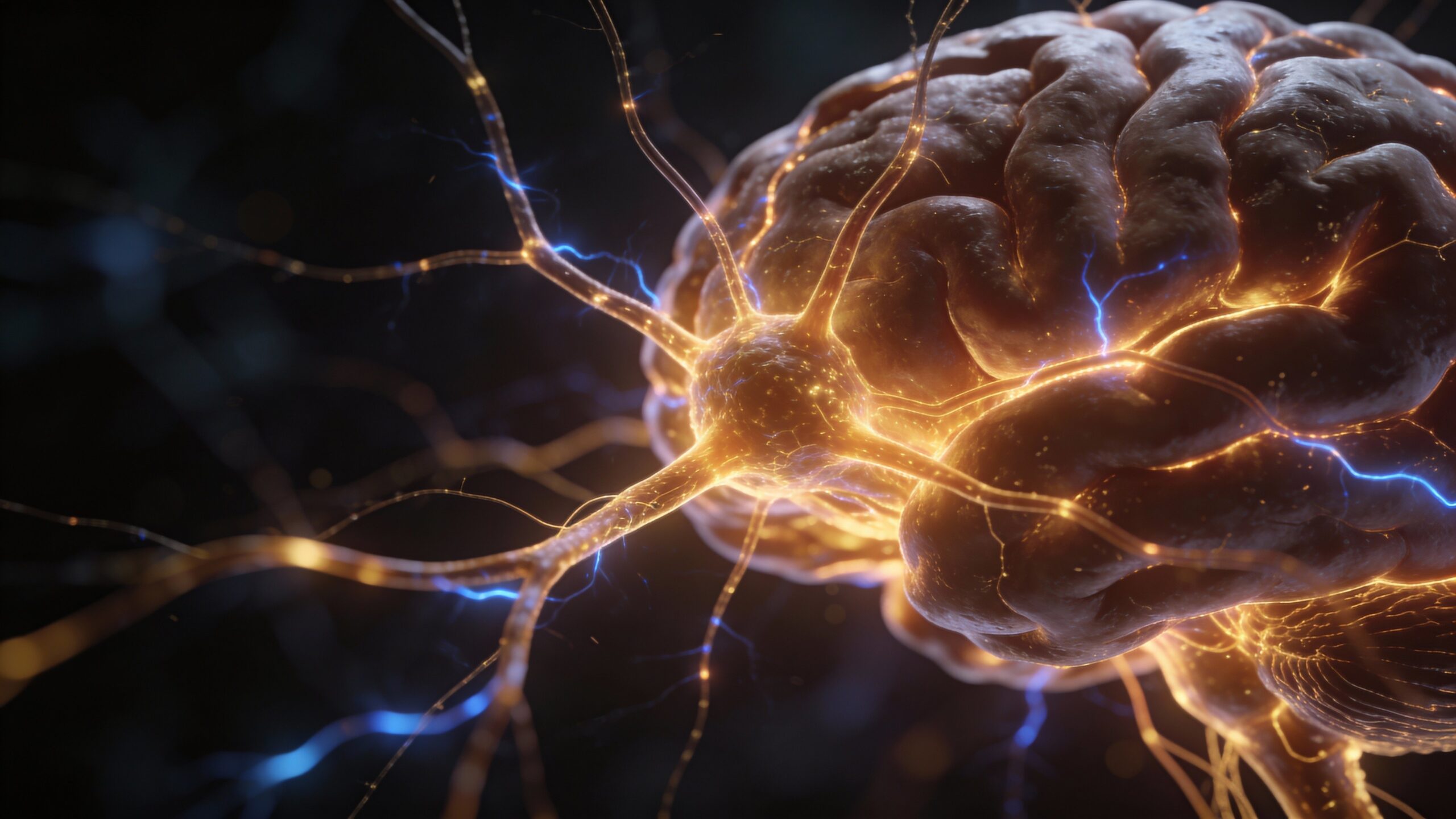
Cognitive science intersects with neuroscience to uncover how brain structures support mental functions. Networks of neurons communicate through electrical and chemical signals, forming circuits that underlie perception, memory, and reasoning.
Different brain regions specialize in particular functions, but cognition emerges from distributed networks rather than isolated centers. Advances in neuroimaging, such as functional MRI and EEG, allow researchers to observe brain activity during cognitive tasks, bridging the gap between mind and brain.
Artificial Intelligence and Cognitive Science
Cognitive science has inspired artificial intelligence research, and AI in turn provides models for understanding human cognition. Machine learning systems mimic aspects of perception, learning, and decision-making, offering insights into cognitive processes.
However, human cognition remains more flexible, context-aware, and creative than current AI. Studying AI and human cognition together helps researchers explore fundamental questions about intelligence, consciousness, and the nature of thought.
Cognitive Science in Everyday Life
Cognitive science influences education, mental health, technology design, marketing, and workplace productivity. Learning strategies such as spaced repetition, active recall, and interleaved practice are grounded in cognitive research. User-friendly technology interfaces rely on cognitive principles of perception and attention. Understanding cognition can improve habits, communication, problem-solving, and creativity. It also informs therapies for cognitive disorders, memory decline, and learning disabilities.
The Future of Cognitive Science
Cognitive science is rapidly evolving, integrating genetics, neurotechnology, artificial intelligence, and computational modeling. Emerging research explores brain–computer interfaces, cognitive enhancement, and the nature of consciousness. Ethical questions about privacy, cognitive manipulation, and human–machine integration are becoming increasingly important.
As technology advances, cognitive science will play a central role in shaping education, healthcare, and society. Understanding how we think, learn, and remember is not only a scientific quest but a guide for improving human potential.
Understanding the Mind to Unlock Human Potential
Cognitive science offers a comprehensive framework for understanding how the mind works. By exploring perception, attention, learning, memory, language, emotion, and decision-making, it reveals the hidden processes that shape every thought and action. This field bridges disciplines to explain cognition from neurons to culture, providing practical insights for everyday life. As research progresses, cognitive science will continue to illuminate the mysteries of the mind, helping humans learn faster, think more clearly, remember more effectively, and navigate an increasingly complex world with greater understanding and wisdom.