A classroom conflict became a reading and writing project
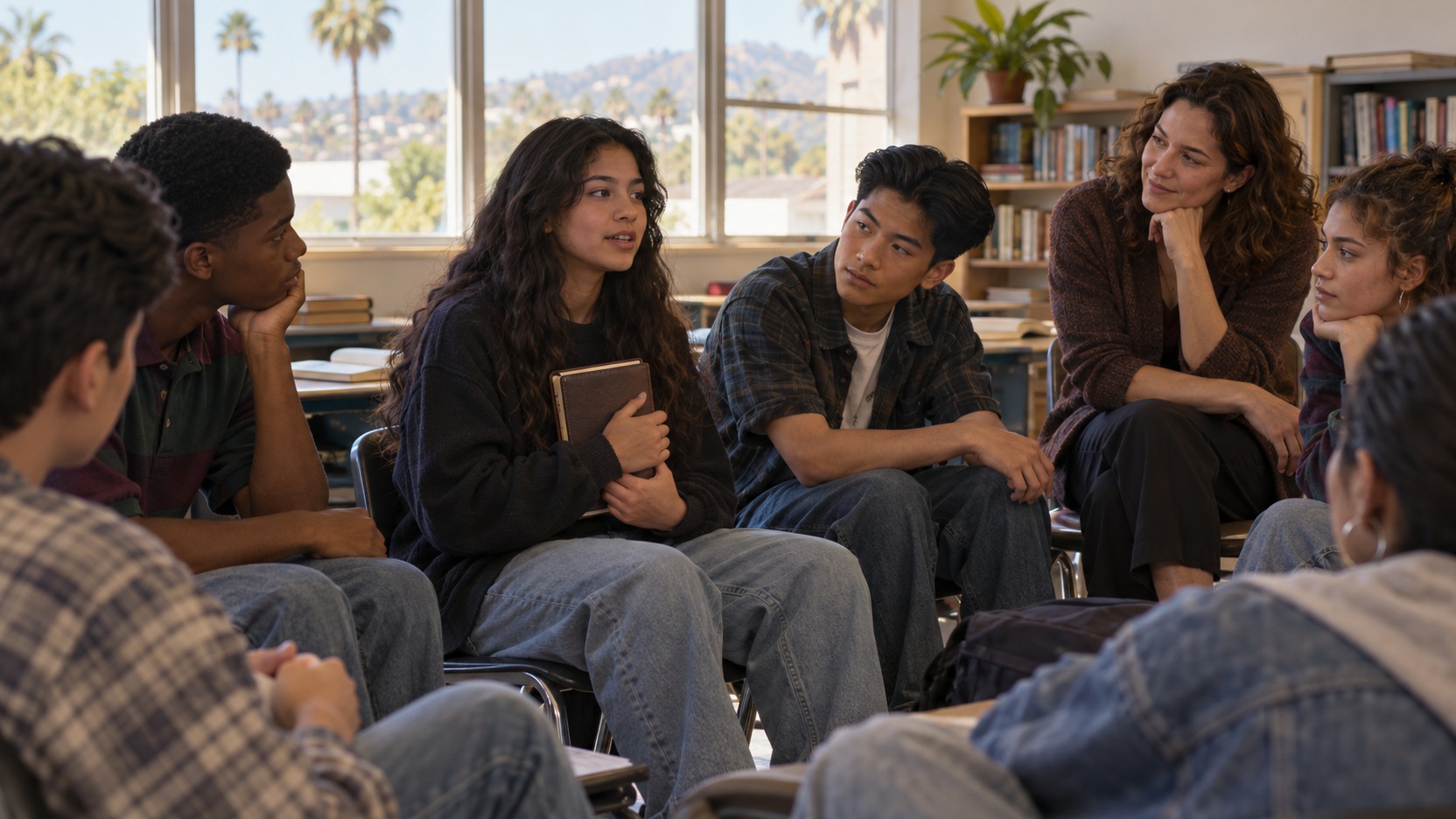
Before there was a film, the Freedom Writers were students in Erin Gruwell’s English classes at Wilson High School in Long Beach, California. Their published story begins with an encounter over a racist caricature and develops through reading diaries, writing personal accounts, organizing a visitor’s trip, and becoming authors themselves. Those steps matter because they show actual classroom work behind the familiar image of an inspiring teacher. This article follows that documented sequence and explains how the students’ contributions shaped the book and its later adaptation. It separates what the publisher and Gruwell report from interpretation, while keeping a few practical limits in view: a moving account does not establish a universal teaching method, and young people’s lives extend beyond a film’s ending.
A: The published account includes student diary entries and narrative by Erin Gruwell.
A: A dramatic adaptation should not be treated as a complete historical record.
A: Their writing and learning are contributions to the achievement, not simply evidence of the teacher’s influence.
A: No. Interpretation, imagined perspective, and other suitable forms can meet a learning purpose.
A: No. Teachers should use appropriate professional and safeguarding routes when support is needed.
A: Provide context and examine connections without declaring different historical experiences identical.
A: Review its fit with curriculum, students, learning aims, and school responsibilities first.
A: It helps the writer make meaning clearer through deliberate choices for an audience.
A: As a valuable perspective shaped by the speaker, time, and purpose of the account.
A: A clear aim, suitable material, informed choices, appropriate boundaries, and evidence of learning.
The starting point was Wilson High School in 1994
The publisher’s book synopsis places the beginning in 1994, when Gruwell was a new teacher in Long Beach. It describes students who had been dismissed as unlikely to succeed. Those labels belong to the account’s description of how the students were perceived; they should not become our own description of their ability. The important starting tension is between an institution’s expectations and the work the young people would eventually produce.
The setting gives the story a particular scale. This was a group of adolescents attending an actual school, with an English teacher trying to make a curriculum meaningful. Their later visibility should not erase that ordinary educational relationship. Reading and writing remained the work through which the story developed, even when events moved beyond the classroom.
A racist caricature exposed a gap in the planned lesson
According to the same publisher account, Gruwell intercepted a paper carrying a racist caricature and connected its prejudice with the Holocaust. The students’ reaction showed unfamiliarity with that history. The incident became a reason to change the curriculum rather than merely punish the immediate behavior. It introduced a subject the class needed to investigate and a problem the teacher could address through reading.
This is a consequential episode because the classroom conflict and the academic direction are connected. Gruwell did not simply offer a motivational speech about being nicer. The account describes a move toward literature that could make intolerance discussable through another person’s experience. A reader can see why the next choice of texts matters without treating every part of the confrontation as a scene to reproduce.
The published summary is not a transcript of the exchange, so details beyond it should not be supplied from memory of the film. Nor does a gap in historical knowledge justify dismissing the students. It explains an instructional starting point. The story becomes more informative when that distinction is maintained: an observed difficulty led to different learning material, rather than proving a permanent limitation in the learners.
Anne Frank and Zlata Filipović supplied young writers’ perspectives
Scholastic’s account of Gruwell’s work identifies the diaries of Anne Frank and Zlata Filipović among the texts students read. It also describes studying the civil rights Freedom Riders. The selection connected English learning with young people’s written accounts and the history of opposition to intolerance. These were specific reading choices, not a claim that any emotionally intense book would have produced the same response.
Reading created a route into the students’ own writing
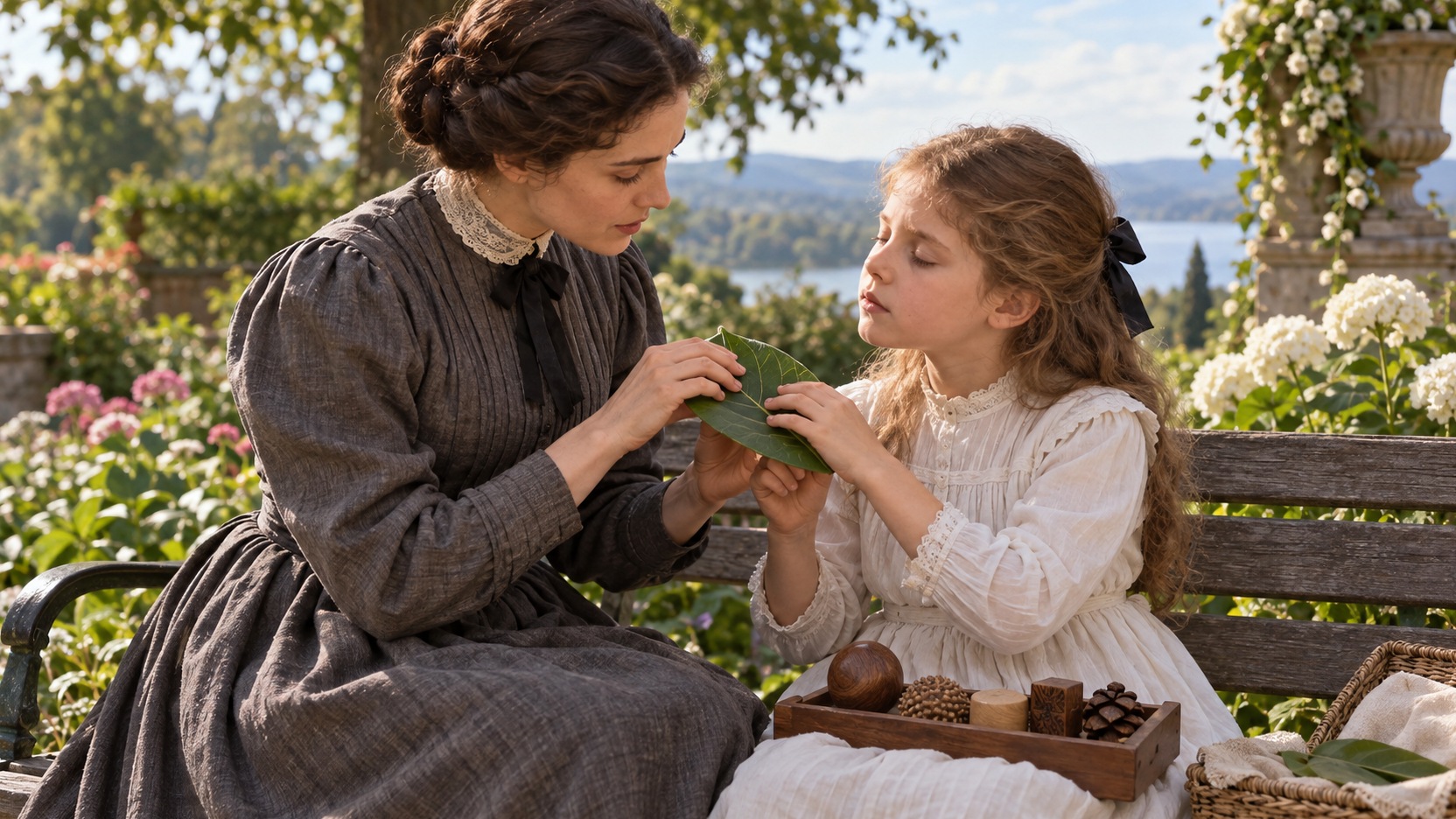
The diaries offered an important change in position for the reader. A young person was not only someone adults described; a young person could observe, interpret, and record an experience. That is a useful way to understand the bridge from reading a published diary to writing an account of one’s own. It shifts attention from whether a student’s life seems important to an outsider toward what the student can communicate as an author.
The contexts still need to remain distinct. A connection involving fear, exclusion, or conflict does not make every historical situation equivalent. Comparing an account with another experience can begin an inquiry, but the inquiry should preserve differences as well as similarities. Careful reading requires attention to who wrote a text, what they encountered, and what the words actually support.
Gruwell later described changing a syllabus that did not connect
In her interview with Alison Lebovitz, Gruwell recalls a planned syllabus involving Homer and Shakespeare meeting resistance. She describes seeking stories her students could connect with and arranging encounters with Holocaust survivors. She also recalls taking additional jobs to obtain books. These are her retrospective explanations of the practical effort behind the reading project, rather than independent measurements of its effects.
That recollection adds material conditions to a story sometimes reduced to personality. A teacher can choose a promising text but still need copies, preparation, transport, or help arranging a visit. Those requirements make the work more substantial than an inspiring gesture. They also explain why copying a visible activity without its supporting arrangements would give an incomplete picture.
The interview should not be used to impose the same financial burden on another teacher. Its relevance here is historical: Gruwell describes resources and obstacles that formed part of her experience. An educational interpretation can recognize commitment while asking how a school should support worthwhile teaching. Personal sacrifice is one element of this account, not a necessary qualification for every competent educator.
The students raised money for Miep Gies to visit
The publisher’s description of the book recounts a Read-a-thon for Tolerance that helped fund a California visit by Miep Gies, who had helped shelter Anne Frank’s family. Gies addressed the students as people whose own actions mattered. The episode connects a person associated with their reading to an event the students helped make possible. It is a concrete example of participation extending beyond receiving an assigned text.
The fundraising also changes how the young people appear in the story. They were not only an audience waiting for a memorable visitor. Their work helped produce the encounter. That contribution deserves to remain visible when a retelling concentrates on Gruwell’s determination or the emotional effect of the meeting.
The name Freedom Writers acknowledged the Freedom Riders
The publisher explains the group’s name as a tribute to the civil rights Freedom Riders. The name placed writing alongside an example of organized opposition to injustice. It did not make the students’ classroom project identical to the historical campaign. Its significance is that they adopted a collective identity associated with using their voices, giving the eventual book a title that foregrounded the young authors rather than only their teacher.
Journals became material for a jointly authored book
The published work combines student diary entries with Gruwell’s narrative. That arrangement allows different voices to contribute to the classroom story. A teacher’s explanation can connect events, while a student’s entry can show what an experience meant from another position. The book’s authorship is therefore central to understanding what the class produced.
A journal collection also involves selection and presentation. The entries a reader encounters belong to a published work, rather than an unrestricted view into every student’s private life. A responsible retelling should not invent additional disclosures or assume the authors all felt the same way. Their shared project and their individual perspectives can both be recognized.
The move from classroom writing to publication is a change in audience. Work initially produced in a school setting becomes available to people who were never part of that setting. That difference helps explain why authorship matters beyond the word diary. The students’ accounts are the substance readers encounter, not decorative evidence attached to someone else’s achievement.
For an English classroom, this provides a concrete object to study. Readers can examine how an entry establishes perspective, which details carry its meaning, and how the surrounding narrative affects interpretation. Those are literary questions grounded in the resulting book. They preserve attention to the students’ intellectual work alongside the experiences that gave it urgency. A reader can compare the effect of a concrete detail with the effect of a broad statement, or notice where an entry changes direction. Such attention gives the writing more than a ceremonial place in the story. The published pages become work to interpret, not merely an outcome to applaud from a distance.
Graduation belongs to the reported outcome
The Freedom Writers Foundation’s curriculum page reports that the 150 original students graduated and became published authors. That is the organization’s account of the group’s outcome. It explains part of the story’s public appeal, but it does not isolate the effect of any individual lesson. Graduation, publication, and the continuing lives of the participants should be recognized without turning the account into a controlled evaluation of a teaching technique.
The endpoint also should not obscure the work between the first conflict and the later achievement. The account involves reading, sustained writing, support, and collective action. Calling the outcome a miracle can make that work disappear. A more useful interpretation gives the students credit for what they did while acknowledging the teacher and other conditions around them.
The 2007 film introduced another way to encounter the story
Paramount’s film page identifies the dramatic adaptation, with Hilary Swank portraying Gruwell. A film provides performances and a selected sequence through which viewers follow an account. That can bring an audience toward the book, but it should not supply unverified dialogue for a historical article. A memorable scene needs a separate basis before it is described as an exact classroom event.
Comparing the book and film keeps the writers in view
A useful comparison begins with what each form makes visible. A screen performance lets a viewer watch interactions, while a written entry asks a reader to attend directly to an author’s language. Neither experience needs to replace the other. Someone who first encounters the film can return to the book to investigate the voices behind the adaptation.
That return is particularly important when the teacher becomes the most recognizable figure. The public story includes her decisions, but the resulting writing belongs to more than one contributor. An account that remembers only the adult risks converting students into supporting characters in their own published achievement. Giving their authorship equal attention produces a fuller reading of the title Freedom Writers.
Three limits keep a present-day response proportionate
The original classroom story can inspire reading and writing without creating a requirement for private disclosure. Students in another setting should have suitable ways to meet a learning goal without recounting painful experiences. Teachers also need appropriate support and safeguarding routes when serious concerns arise. Finally, the history of this group does not establish that reproducing its texts or activities will reproduce its outcomes. Those limits protect a thoughtful response without replacing the story with an unrelated list of cautions.
The achievement was a body of work, not only a message
The documented sequence gives the story its substance: a classroom conflict led toward different reading, reading opened a way into writing, students helped organize a significant visit, and their accounts became a published collection. The teacher’s decisions matter within that sequence. So do the students’ effort and the material work that made participation possible.
A reader can appreciate the inspiration more precisely after seeing those connections. The Freedom Writers were not simply told that their voices mattered; the public account describes them producing writing that other people could read. The book and film preserve different views of that work. Keeping the actual project at the center makes the educational story more informative than either an uncomplicated rescue narrative or a general lesson about good intentions.