Understanding The History of Computers in Plain Language
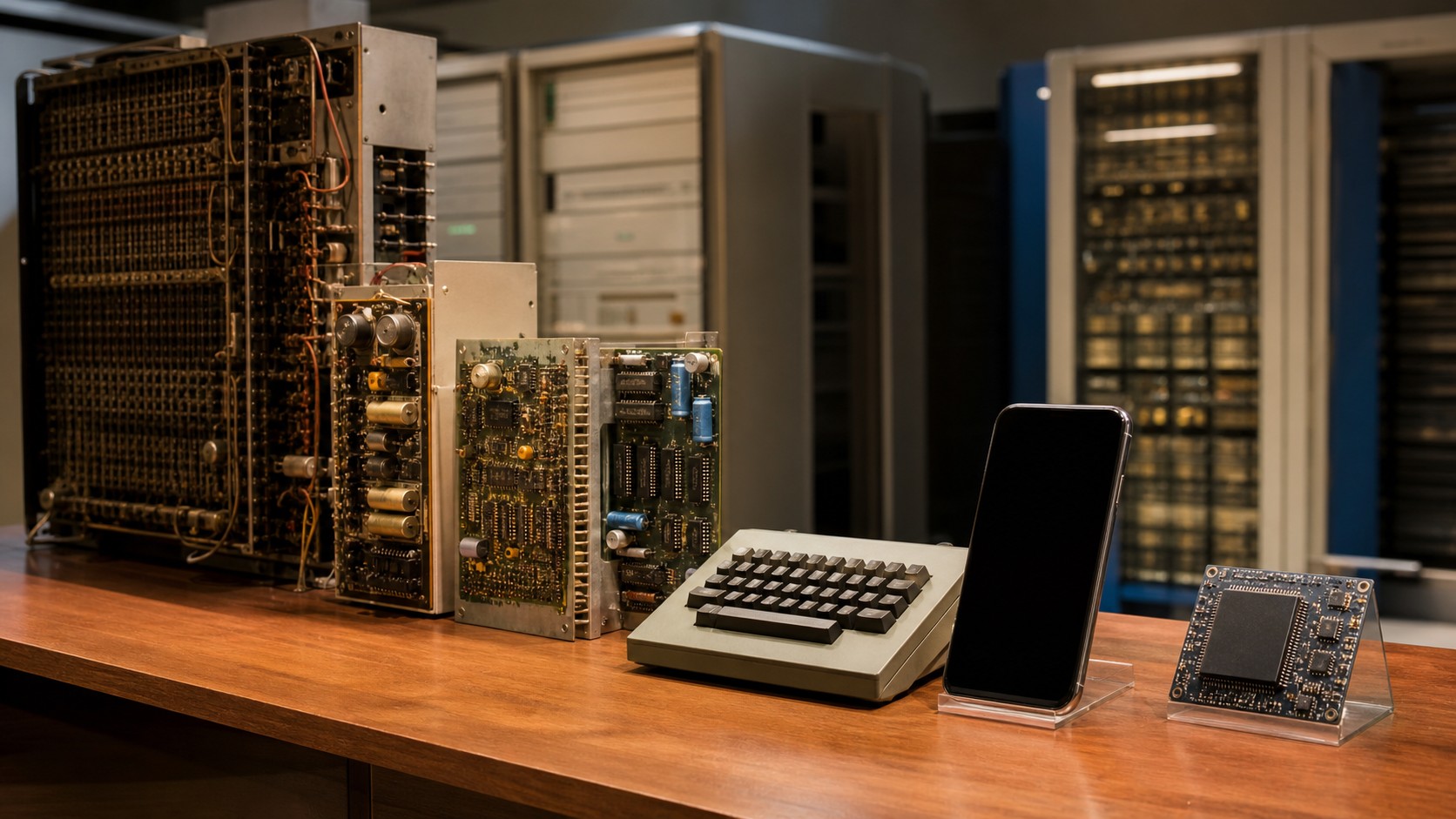
The History of Computers: From Room-Sized Machines to Smartphones is written for curious readers who want a clear explanation without jargon taking over. Computers evolved by shrinking hardware while expanding capability. The subject matters because it shapes everyday decisions, public debates, classrooms, and long-term planning. A useful explainer should define the core idea, show how the moving parts relate, and point out where simple answers become misleading. This guide follows that path with concrete examples, careful distinctions, and practical questions readers can carry into real conversations.
A: Computers evolved by shrinking hardware while expanding capability.
A: It affects how people interpret mainframes, personal computers, and public decisions.
A: Treating one visible event as the whole explanation.
A: Mainframes is a useful starting point because it is easy to observe.
A: They compare incentives, evidence, time horizons, and unintended effects.
A: Yes, conditions shift and the same principle can appear differently.
A: Watch early machines filled rooms and transistors replaced vacuum tubes together.
A: No, context changes the strength and direction of the explanation.
A: Use one definition, one example, and one limitation.
A: Look for the concept in smartphones and cloud systems.
The Core Idea Behind The History of Computers
The Core Idea Behind The History of Computers begins with a practical observation: early machines filled rooms. In technology & computing, that observation rarely stands alone. It connects to institutions, habits, incentives, history, and the choices people make with incomplete information. Readers understand the subject faster when they see it as a relationship among forces rather than as a vocabulary word to memorize.
A second layer is that transistors replaced vacuum tubes. This is where many beginner explanations become too thin. They name the concept but do not show what changes when conditions shift. A better explanation asks who is affected first, who has room to adapt, which signals are reliable, and which consequences arrive later than expected.
The example of mainframes keeps the discussion grounded. It shows that the idea is not locked inside textbooks; it appears in ordinary choices, public systems, and the way people interpret change. Once that concrete case is clear, the wider pattern becomes easier to recognize in new situations.
Why the Definition Matters
Why the Definition Matters begins with a practical observation: transistors replaced vacuum tubes. In technology & computing, that observation rarely stands alone. It connects to institutions, habits, incentives, history, and the choices people make with incomplete information. Readers understand the subject faster when they see it as a relationship among forces rather than as a vocabulary word to memorize.
A second layer is that microprocessors enabled personal devices. This is where many beginner explanations become too thin. They name the concept but do not show what changes when conditions shift. A better explanation asks who is affected first, who has room to adapt, which signals are reliable, and which consequences arrive later than expected.
The Main Forces at Work
The Main Forces at Work begins with a practical observation: microprocessors enabled personal devices. In technology & computing, that observation rarely stands alone. It connects to institutions, habits, incentives, history, and the choices people make with incomplete information. Readers understand the subject faster when they see it as a relationship among forces rather than as a vocabulary word to memorize.
A second layer is that networks changed use. This is where many beginner explanations become too thin. They name the concept but do not show what changes when conditions shift. A better explanation asks who is affected first, who has room to adapt, which signals are reliable, and which consequences arrive later than expected.
The example of smartphones keeps the discussion grounded. It shows that the idea is not locked inside textbooks; it appears in ordinary choices, public systems, and the way people interpret change. Once that concrete case is clear, the wider pattern becomes easier to recognize in new situations.
Common Misunderstandings
Common Misunderstandings begins with a practical observation: networks changed use. In technology & computing, that observation rarely stands alone. It connects to institutions, habits, incentives, history, and the choices people make with incomplete information. Readers understand the subject faster when they see it as a relationship among forces rather than as a vocabulary word to memorize.
A second layer is that early machines filled rooms. This is where many beginner explanations become too thin. They name the concept but do not show what changes when conditions shift. A better explanation asks who is affected first, who has room to adapt, which signals are reliable, and which consequences arrive later than expected.
One careful habit is to separate short-term movement from long-term meaning. A single event can attract attention, but a durable explanation looks for patterns across time, incentives, constraints, and evidence. That discipline prevents overreaction and makes the concept more useful.
Another helpful habit is comparison. Looking at mainframes beside personal computers reveals which parts of the explanation stay constant and which parts depend on context.
Real-World Examples Readers Recognize
Real-World Examples Readers Recognize begins with a practical observation: early machines filled rooms. In technology & computing, that observation rarely stands alone. It connects to institutions, habits, incentives, history, and the choices people make with incomplete information. Readers understand the subject faster when they see it as a relationship among forces rather than as a vocabulary word to memorize.
A second layer is that transistors replaced vacuum tubes. This is where many beginner explanations become too thin. They name the concept but do not show what changes when conditions shift. A better explanation asks who is affected first, who has room to adapt, which signals are reliable, and which consequences arrive later than expected.
How Experts Usually Think About It
How Experts Usually Think About It begins with a practical observation: transistors replaced vacuum tubes. In technology & computing, that observation rarely stands alone. It connects to institutions, habits, incentives, history, and the choices people make with incomplete information. Readers understand the subject faster when they see it as a relationship among forces rather than as a vocabulary word to memorize.
A second layer is that microprocessors enabled personal devices. This is where many beginner explanations become too thin. They name the concept but do not show what changes when conditions shift. A better explanation asks who is affected first, who has room to adapt, which signals are reliable, and which consequences arrive later than expected.
The example of personal computers keeps the discussion grounded. It shows that the idea is not locked inside textbooks; it appears in ordinary choices, public systems, and the way people interpret change. Once that concrete case is clear, the wider pattern becomes easier to recognize in new situations.
Where the Idea Has Limits
Where the Idea Has Limits begins with a practical observation: microprocessors enabled personal devices. In technology & computing, that observation rarely stands alone. It connects to institutions, habits, incentives, history, and the choices people make with incomplete information. Readers understand the subject faster when they see it as a relationship among forces rather than as a vocabulary word to memorize.
A second layer is that networks changed use. This is where many beginner explanations become too thin. They name the concept but do not show what changes when conditions shift. A better explanation asks who is affected first, who has room to adapt, which signals are reliable, and which consequences arrive later than expected.
What Beginners Should Watch Next
What Beginners Should Watch Next begins with a practical observation: networks changed use. In technology & computing, that observation rarely stands alone. It connects to institutions, habits, incentives, history, and the choices people make with incomplete information. Readers understand the subject faster when they see it as a relationship among forces rather than as a vocabulary word to memorize.
A second layer is that early machines filled rooms. This is where many beginner explanations become too thin. They name the concept but do not show what changes when conditions shift. A better explanation asks who is affected first, who has room to adapt, which signals are reliable, and which consequences arrive later than expected.
One careful habit is to separate short-term movement from long-term meaning. A single event can attract attention, but a durable explanation looks for patterns across time, incentives, constraints, and evidence. That discipline prevents overreaction and makes the concept more useful.
Another helpful habit is comparison. Looking at mainframes beside personal computers reveals which parts of the explanation stay constant and which parts depend on context.
How to Use This Knowledge
How to Use This Knowledge begins with a practical observation: early machines filled rooms. In technology & computing, that observation rarely stands alone. It connects to institutions, habits, incentives, history, and the choices people make with incomplete information. Readers understand the subject faster when they see it as a relationship among forces rather than as a vocabulary word to memorize.
A second layer is that transistors replaced vacuum tubes. This is where many beginner explanations become too thin. They name the concept but do not show what changes when conditions shift. A better explanation asks who is affected first, who has room to adapt, which signals are reliable, and which consequences arrive later than expected.
The example of mainframes keeps the discussion grounded. It shows that the idea is not locked inside textbooks; it appears in ordinary choices, public systems, and the way people interpret change. Once that concrete case is clear, the wider pattern becomes easier to recognize in new situations.
A Clear Way to Remember It
A Clear Way to Remember It begins with a practical observation: transistors replaced vacuum tubes. In technology & computing, that observation rarely stands alone. It connects to institutions, habits, incentives, history, and the choices people make with incomplete information. Readers understand the subject faster when they see it as a relationship among forces rather than as a vocabulary word to memorize.
A second layer is that microprocessors enabled personal devices. This is where many beginner explanations become too thin. They name the concept but do not show what changes when conditions shift. A better explanation asks who is affected first, who has room to adapt, which signals are reliable, and which consequences arrive later than expected.
The Reader’s Practical Takeaway
The most useful takeaway is not a slogan about the history of computers. It is a method: define the idea, identify the forces behind it, test the explanation against real examples, and stay alert to limits. That method helps readers avoid both oversimplification and needless confusion.
With that approach, the history of computers becomes easier to discuss because the reader can explain what is happening, why it matters, and what evidence would change the conclusion.
The Reader’s Practical Takeaway
The most useful takeaway is not a slogan about the history of computers. It is a method: define the idea, identify the forces behind it, test the explanation against real examples, and stay alert to limits. That method helps readers avoid both oversimplification and needless confusion.
With that approach, the history of computers becomes easier to discuss because the reader can explain what is happening, why it matters, and what evidence would change the conclusion.
The Reader’s Practical Takeaway
The most useful takeaway is not a slogan about the history of computers. It is a method: define the idea, identify the forces behind it, test the explanation against real examples, and stay alert to limits. That method helps readers avoid both oversimplification and needless confusion.
With that approach, the history of computers becomes easier to discuss because the reader can explain what is happening, why it matters, and what evidence would change the conclusion.
The Reader’s Practical Takeaway
The most useful takeaway is not a slogan about the history of computers. It is a method: define the idea, identify the forces behind it, test the explanation against real examples, and stay alert to limits. That method helps readers avoid both oversimplification and needless confusion.
With that approach, the history of computers becomes easier to discuss because the reader can explain what is happening, why it matters, and what evidence would change the conclusion.