Look for worthwhile learning before chasing a free certificate
Free professional development can make useful learning accessible when a school budget or personal finances leave little room for paid training. The strongest opportunities are not always marketed as courses: a library module, museum workshop, subject community, or carefully facilitated school inquiry may provide valuable development. At the same time, free access does not necessarily include a certificate, formal credit, or acceptance by an employer. Offers can change, and old lists often continue circulating after a funding period ends. This guide identifies credible places to begin and explains how to check the particular opportunity you choose. The aim is to obtain relevant learning with clear terms rather than accumulating certificates whose value remains uncertain.
A: No. Check whether the specific opportunity includes completion evidence and whether a fee applies.
A: Acceptance depends on the relevant requirements; confirm with the authority that reviews it.
A: Yes. Funding periods and terms can change, so an older announcement needs current verification.
A: Check the individual event; a general hub can link to opportunities with different conditions.
A: Plan suitable practice and follow-up support when the learning goal requires it.
A: Use its current official listing and registration information rather than an archived announcement.
A: It may, provided you examine the purpose and adapt relevant context thoughtfully.
A: A small relevant selection with follow-through is usually easier to turn into useful learning.
A: The current official link, the useful learning feature, and accurate access or recognition terms.
A: Identify the understanding or capability developed and how it informs your teaching decisions.
Separate learning access from formal recognition
There are several different meanings of free. Materials may be available without payment, attendance may cost nothing, or a provider may include a completion certificate. A credit-bearing option could still have a fee. Check which part of the offer is free before deciding that it meets your needs.
If professional development hours must satisfy a requirement, ask the relevant employer or licensing authority what evidence is accepted. A provider cannot decide recognition for every jurisdiction. Obtain clarification before spending hours on a course chosen mainly for credit. Learning value and administrative acceptance should be assessed separately.
Also distinguish a certificate from a qualification. A document showing completion may be useful evidence of participation without carrying academic credit or a regulated credential. This is not a reason to dismiss the learning. It is a reason to describe the result accurately when recording or presenting your development.
Start with a need you can connect to a resource
A free catalog can encourage browsing indefinitely. Identify a topic or teaching decision that deserves attention now, then choose a resource suited to it. You might need help using historical sources, interpreting student work, or understanding a particular subject area. A clear aim makes a small amount of learning more useful than several unrelated sessions selected because they cost nothing.
Explore the Library of Congress for primary-source learning
The Library of Congress teacher professional development page describes free primary-source learning through several formats, including self-paced modules, webinars, and other resources. It is a useful starting point for teachers interested in working with historical materials. Check the specific listing for access arrangements and any completion evidence. Do not assume that every format provides identical recognition.
Choose a resource with a classroom purpose. A teacher might explore how to help students examine a photograph or compare accounts of an event. The useful outcome is not simply discovering a striking source. It is understanding how that source can support a learning goal and what background students need to interpret it.
Allow time to examine the material carefully. Primary sources can be incomplete, unfamiliar, or difficult to contextualize. A professional learning resource should help you consider those features rather than treating an object as self-explanatory. The course or session becomes more valuable when you connect it with a planned lesson and a thoughtful review of student responses.
Use museum educator pages to locate current opportunities
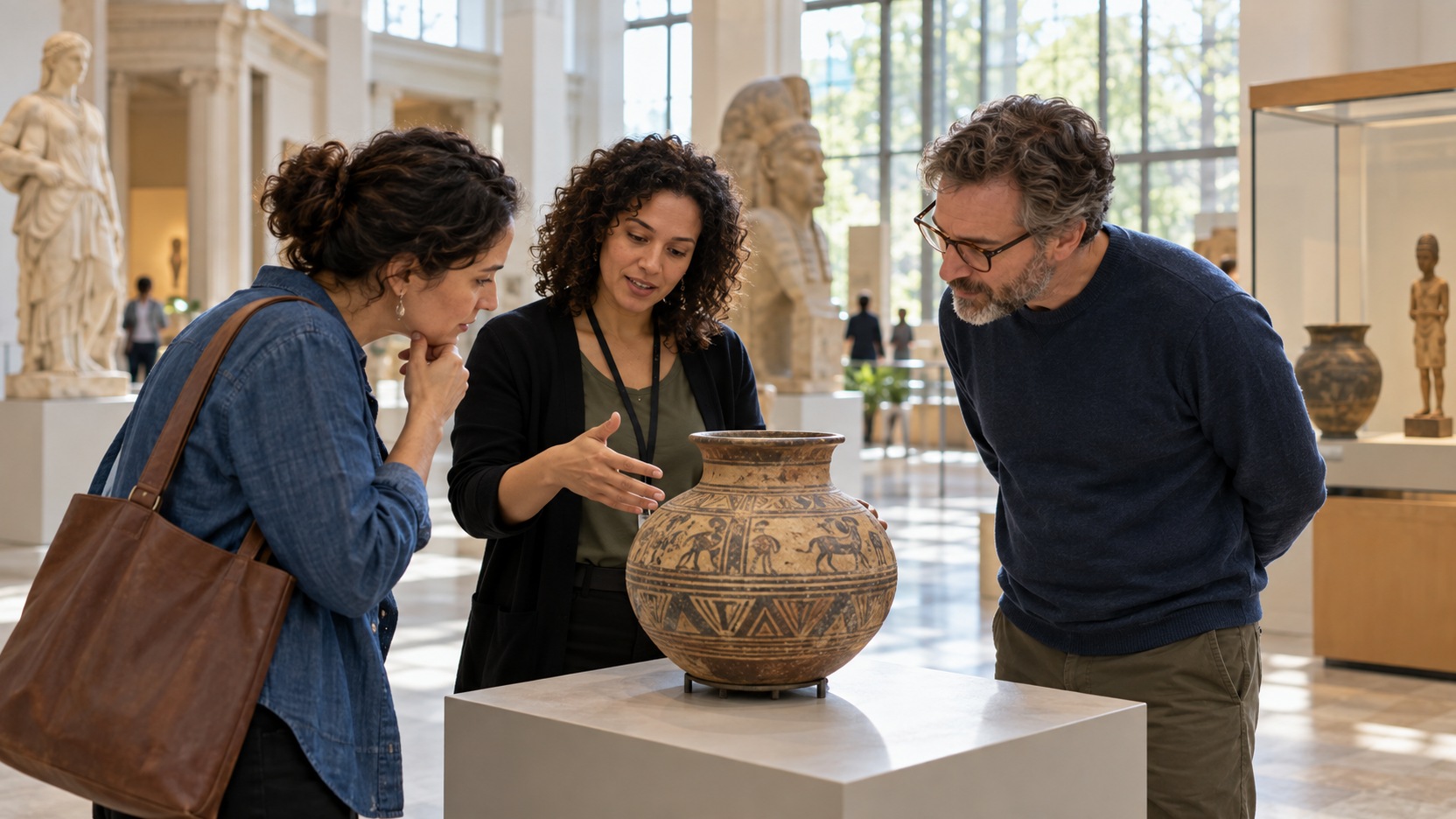
The Smithsonian’s professional development hub links to learning across its museums and educational programs. The range includes art, science, history, and culture. Some linked opportunities are free, while formats and conditions vary. Follow the current listing for the particular museum or event instead of assuming that a general hub guarantees every option is free.
Museum learning can strengthen subject understanding as well as provide classroom resources. An educator might learn to analyze an object, connect a scientific exhibit with curriculum, or frame a discussion around visual evidence. Decide what understanding you want to develop. A collection of downloaded activities is not automatically professional learning unless you examine how and why to use them.
Check whether an event is live, archived, application-based, or limited to a particular group. A summer institute advertised on a website may already have finished or may require a separate application. Dates and availability matter. For example, an archived announcement is evidence that an opportunity existed, not proof that registration remains open.
If travel is involved, distinguish a free session from the total cost of attending. Transport, accommodation, and time away from other commitments can still be substantial. An online recording may offer a different learning experience with different terms. Compare the actual options rather than relying only on the word free.
Investigate university-based resource centers carefully
University centers can provide useful teaching resources and learning modules, but their certificate arrangements may change. The IRIS professional development page has advertised a free-certificate period ending in December 2025. That wording should not be treated as proof of a continuing 2026 offer. Check current module and certificate terms directly before relying on a free completion document. The distinction is especially important when an older recommendation is still circulating.
Consider the British Council for English teaching development
The British Council’s teacher website page points educators toward free TeachingEnglish support and professional learning resources. Its development page also directs teachers to online opportunities. Check the current course or webinar details for dates, eligibility, language, and completion arrangements. These resources are especially relevant when the content matches an English teaching need.
Global resources require contextual judgment. An example may assume different ages, classroom conditions, or curriculum expectations from your own. Read for the underlying teaching purpose and consider what needs adaptation. A free resource remains useful when it develops understanding, even if the example cannot be copied directly into your next lesson.
Look for local opportunities with informed facilitation
School districts, public libraries, universities, and subject groups may offer learning at no charge to eligible participants. Use their current official pages or established contacts to investigate. Avoid treating a social-media list as a reliable account of present access. A local opportunity may be well suited to your curriculum and easier to connect with colleagues.
Ask how the session is designed. A free event can still provide careful explanation, active learning, and relevant feedback. It can also be little more than a product demonstration or promotional presentation. The absence of a fee does not remove the need to examine purpose and quality.
Where a vendor sponsors a session, understand the commercial connection. Product training may be useful if your school uses the tool, but it is different from an independent examination of teaching approaches. Check whether the session requires a trial account or later subscription. You should be able to understand the commitment before registering.
Evaluate the resource through a small preview
Before committing to a long sequence, inspect a sample or introductory section if available. Look at the clarity of explanation, intended audience, and depth of content. Ask whether the learning addresses your aim or simply repeats familiar advice. A preview can help avoid a substantial investment of time in a poorly matched resource.
Check accessibility and practical requirements. Captions, readable materials, reliable access, and suitable formats can influence whether you can participate effectively. A resource that is free but difficult to use may not be the best option. Consider these conditions alongside content quality.
Be cautious about exaggerated promises. A short course cannot reasonably guarantee mastery of a complex area for every participant. Look for a specific outcome and an honest account of scope. Credible learning does not need to be advertised as a complete transformation.
When information is missing, ask the provider or choose another opportunity with clearer terms. Uncertainty about recognition, cost, or access should not be filled with optimistic assumptions. A few minutes of clarification can prevent disappointment after substantial work. The decision should be based on the offer that actually exists.
Use free materials as part of a supported learning plan
A module or recording may provide good content without individual feedback. If your goal involves a teaching skill, consider how to practice and review it afterward. A suitable colleague or existing school learning process may help. Arrange that support deliberately rather than assuming that watching the resource completes the development.
For example, after studying an approach to source analysis, plan one discussion around a selected object or document. Examine how students explain their interpretations and what support they need. This connects the resource with a concrete learning decision. It also gives you a basis for assessing what the professional learning contributed.
Track the useful outcome rather than a growing download folder
Keep a brief account of the resource, its purpose, and what you learned. Include the evidence of completion required for any relevant process. The record should help you retrieve and explain the learning. A large collection of saved files may be less useful than a small account of an approach you can now use thoughtfully.
Distinguish material collected from material examined. Downloading a guide does not show that its ideas have been understood or tested. Choose a limited set of resources and engage with them sufficiently. Free access can create abundance, but professional learning still requires attention and interpretation.
Revisit the record after application. What became clearer, what changed in your practice, and what remains uncertain? These reflections can guide the next choice. They also help you explain development accurately without claiming outcomes that were not observed.
Share opportunities with accurate terms
When recommending a resource to colleagues, include the official current link and the feature you found useful. State whether you used a module, webinar, or other format. Avoid promising free credit unless the relevant terms and authority have been checked. A careful recommendation saves others from relying on an outdated or incomplete description.
Explain who might benefit. A resource on primary-source interpretation may fit one colleague’s need while being less relevant to another’s current priority. Specific recommendations are easier to use than a long undifferentiated list. Sharing should support informed choices rather than pressure everyone to collect the same certificates.
Choose one feasible opportunity and follow through
A productive search ends with a manageable decision. Select one current opportunity, verify the terms that matter, and arrange time to engage with it. Identify a small application or discussion that can help consolidate the learning. This gives free professional development a practical destination.
Consider a small learning partnership when a freely available resource needs discussion. Two colleagues can choose the same short module, examine an example, and compare how its ideas fit their teaching. Agree a limited commitment and a useful purpose. The arrangement should make understanding easier rather than create an informal course with demands nobody has time to meet.
Keep the partnership focused on reasoning. Instead of asking whether both people liked the resource, discuss what it clarified and what would need checking before classroom use. A difference in interpretation can reveal an assumption worth examining. That conversation gives the material a more useful destination than simply announcing that another module has been completed.
Quality learning can come from public institutions, specialist organizations, and professional communities without a participation fee. Its value depends on relevance, trustworthy content, and thoughtful use. Check access and recognition carefully, especially when older offers remain online. Then invest attention in the learning itself, so the opportunity produces more than another document in a professional development folder.